Restaurant plumbing problems often include slow drains, grease buildup, leaking fixtures, and weak hot water. The best first step is to protect the area, stop nearby water use, check only safe causes, and call a licensed commercial plumber when sewage, gas, food safety, or main lines are involved.
A restaurant needs steady water flow and safe drainage each day. One blocked sink can slow food work. One sewer backup can close part of the building. Good plumbing advice helps owners, managers, tenants, and property investors avoid larger damage.
Table of Contents
- What Are the Most Common Restaurant Plumbing Problems?
- How Does Grease Cause Restaurant Drain and Sewer Problems?
- How Should Restaurants Handle Blocked Drains and Slow Fixtures?
- Why Do Restaurant Restrooms Develop Plumbing Issues?
- Why Is Hot Water Important for Restaurant Plumbing?
- How Can Restaurants Prevent Plumbing Emergencies?
- When Should a Restaurant Call a Licensed Commercial Plumber?
- Frequently Asked Questions
What Are the Most Common Restaurant Plumbing Problems?
Common restaurant plumbing problems include grease-clogged drains, blocked sinks, sewer backups, leaking pipes, running toilets, weak water pressure, and hot-water failures. These issues can affect kitchens, restrooms, storage rooms, dining areas, and the main sewer connection.
Restaurant plumbing is one connected system. Supply pipes bring clean water to sinks, dishwashers, toilets, and water heaters. Drain pipes carry used water away. Vent pipes let air move through the drain system. Grease interceptors or traps catch fats, oils, and grease before they reach the sewer.
When one part fails, another fixture may show the first warning. A slow kitchen sink can point to buildup nearby. A restroom floor drain may overflow when the main drain is blocked. Low hot-water flow may come from a failing heater, a closed valve, or a blocked supply line.
Common restaurant plumbing problems include:
- Slow or blocked hand sinks and prep sinks
- Grease interceptor overflow or poor flow
- Dishwasher drain trouble
- Toilets that run, clog, or overflow
- Floor drains with bad smells or standing water
- Leaking supply lines, faucets, or water heaters
- Sewer backups that affect kitchens or restrooms
Some issues need fast action. Sewage, a burst pipe, a gas smell, or a large water leak can harm people and property. Staff should block off the area, stop nearby water use, and follow the restaurant’s emergency plan. Simple checks are safe only when they do not involve sewage, gas, electricity, pressure, or hidden pipes.
Valparaiso Plumbing can help restaurant owners decide if a blocked drain needs routine cleaning or urgent repair. Building age, pipe material, local conditions, and the layout can all affect the right plumbing repair.
How do kitchen, restroom, and utility plumbing systems work together?
Kitchen drains handle food waste, grease, and heavy water use. Restroom drains handle waste, paper, soap, and customer use. Utility plumbing supports dishwashers, mop sinks, ice machines, and water heaters. These branches may be separate, but they often join the same main sewer line.
Which plumbing issues require immediate attention?
Sewage, flooding, a burst pipe, unsafe water, or a gas leak needs prompt professional help. A small faucet drip is less urgent, but it still needs plumbing repair if it may harm walls, floors, or nearby equipment. Managers should record the location and signs before help arrives.
How Does Grease Cause Restaurant Drain and Sewer Problems?
Grease causes trouble when fats, oils, and grease cool inside pipes. The material sticks to the pipe walls and catches food scraps, soap, and other waste. Over time, the opening gets smaller, and water drains more slowly.
Fats, oils, and grease are often called FOG. FOG is cooking waste that can turn solid inside drain pipes. Pouring it into a sink can cause a blockage inside the restaurant or farther down the sewer line.
Warm water does not remove the risk. It can carry grease farther along the pipe before it cools again. Chemical drain cleaners may harm some pipes and workers. They may also leave the main buildup in place. They should not replace proper drain cleaning or grease control.
Every restaurant needs a clear grease plan. Staff should scrape plates into waste containers. Cooking oil should go into approved collection containers. Sink strainers should stay in place and be cleaned often. Grease interceptors need inspection and service based on use and local rules.
Warning signs of a grease-related clog include:
- A kitchen sink that drains slowly after a busy service
- A sour or rancid smell near sinks or floor drains
- Gurgling sounds from nearby pipes
- Water that rises in another fixture when a sink runs
- Repeated blockages after short periods of normal use
- Grease or dirty water around an interceptor
One slow drain may involve a nearby branch line. Several slow drains may point to a larger blockage. If wastewater enters a floor drain, staff should limit water use and close the area until the cause is known.
Restaurants in Valparaiso may have different needs based on building type, kitchen size, and sewer layout. Valparaiso Plumbing can help find out whether the cause is grease, a damaged pipe, a full interceptor, or a deeper sewer problem.
Why do fats, oils, and grease create recurring blockages?
Recurring blockages often mean the source has not been controlled. Cleaning one part of a pipe may restore flow for a short time. Grease can return if staff pour waste into sinks or the interceptor is not cared for. A lasting plan joins good staff habits, proper equipment, inspections, and professional cleaning.
What are the warning signs of a grease-related clog?
Slow flow, bad smells, gurgling, standing water, and repeated backups are common signs. A blockage during peak meal times may mean the pipe cannot handle the flow or has lost much of its opening. Managers should arrange an assessment before a full backup occurs.
How Should Restaurants Handle Blocked Drains and Slow Fixtures?
Restaurants should first stop using the affected fixture. Staff should protect food, equipment, and flooring nearby. They can remove visible debris from a drain strainer and check for a visible leak. They should not open a sewage line or use harsh chemicals as a first step.
Commercial drain cleaning depends on the location and cause. A plumber may use a mechanical tool, a drain camera, or water pressure cleaning when the pipe allows it. A camera inspection uses a small camera to see inside the drain. It can find cracks, roots, breaks, or heavy buildup.
The right method depends on pipe material, line size, access, and the waste inside. A kitchen branch with grease needs a different method than a main sewer line with roots. Professional cleaning should restore flow without harming older or weak pipes.
A blocked drain response should include these steps:
- Stop using the sink, toilet, dishwasher, or nearby fixture.
- Keep food, workers, and customers away from dirty water.
- Move supplies and equipment away from possible water damage.
- Check only safe, visible areas for debris or a loose connection.
- Record when the blockage began and which fixtures are affected.
- Arrange professional help when the blockage returns or spreads.
A recurring blockage is a warning, not just an annoyance. It may point to grease, poor pipe slope, tree roots, shifting soil, broken joints, or a damaged sewer lateral. Sewer line repair may be needed when cleaning does not keep the line open.
Which drain-cleaning methods are suitable for commercial kitchens?
The pipe and blockage decide the best method. Mechanical cable cleaning can clear some obstructions. Water pressure cleaning may remove heavy waste from suitable lines. A camera can find a hidden problem. A licensed plumber should choose the method after checking access, pipe condition, and the risk of damage.
When does a recurring blockage point to a damaged sewer line?
The sewer line may be involved when several fixtures back up or wastewater returns through floor drains. Cleaning that helps only for a short time is another warning. Soggy ground, outdoor odors, and repeated stoppages also need attention. These signs call for a proper inspection.
Why Do Restaurant Restrooms Develop Plumbing Issues?
Restaurant restrooms face heavy use, frequent cleaning, and misuse of toilets and sinks. Common problems include clogged toilets, running valves, leaking faucets, blocked floor drains, weak flushes, and damaged supply lines. A small fixture issue can cause a larger disruption when several restrooms share one branch line.
Toilets may clog when customers flush wipes, paper towels, packaging, or other items. Staff should never flush cleaning cloths, gloves, or chemical containers. Restroom bins should be easy to find and emptied often.
A running toilet wastes water and may have a worn flapper, fill valve, float, or handle. A dripping faucet may have a worn washer, cartridge, loose connection, or damaged hose. These repairs matter because leaks can harm cabinets, walls, floors, and nearby electrical parts.
Floor drains need regular care. A trap is the curved part of a drain that holds water. It helps stop sewer gases from entering the room. If the trap dries out, smells may enter the restroom. If the drain is blocked, dirty water may stay on the floor and create a slip or sanitation risk.
Restroom checks can include:
- Looking for water around toilets and under sinks
- Testing flush handles and noting weak or delayed flushing
- Checking floor drains for standing water or bad smells
- Keeping paper products and wipes out of toilets
- Cleaning strainers without pushing waste into the drain
- Reporting repeat clogs instead of hiding the problem
How does heavy customer use affect toilets, sinks, and floor drains?
Heavy use means more flushing, hand washing, soap, paper, and cleaning water. Fixtures may wear faster, especially when they are old or poorly adjusted. Regular checks help staff find leaks and weak flow before a busy service period turns a small fault into a closure.
What restroom problems may indicate a larger plumbing failure?
Several slow fixtures, bubbling toilets, dirty floor drains, or backups in more than one room may show a main drain problem. A lasting foul smell may point to a dry trap, broken seal, or sewer gas issue. These signs need professional help.
Why Is Hot Water Important for Restaurant Plumbing?
Hot water supports hand washing, dishwashing, surface cleaning, food preparation, and sanitation. A hot-water outage can stop kitchen work and create health concerns. Managers should follow their food safety plan and local rules when the system cannot provide suitable hot water.
Commercial hot-water systems may use storage tanks, tankless units, mixing valves, recirculation pumps, supply lines, and controls. A mixing valve blends hot and cold water to control the delivery temperature. A recirculation system moves hot water through the building so fixtures receive it sooner.
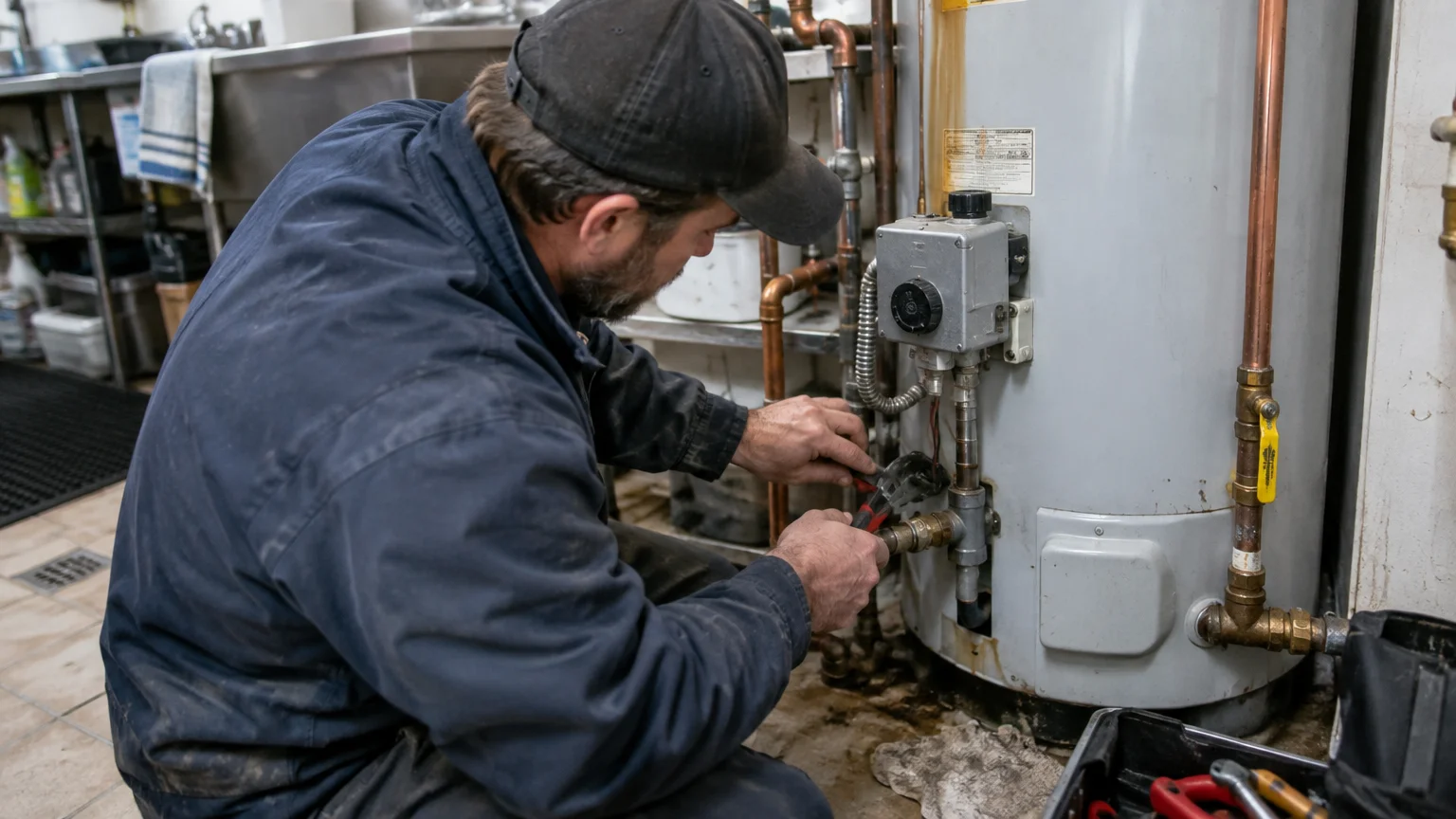
Common causes of hot-water trouble include a failed heating part, burner problem, faulty control, sediment buildup, damaged valve, poor insulation, or leaking tank. A water heater may also shut down because of a safety control or supply problem. Staff should never bypass safety devices or open fuel equipment.
A safe first check is to see if the issue affects more than one fixture. Staff can look for a visible leak, check for a closed valve, and note an error message. Electrical panels, gas controls, and heater covers should be handled only by qualified professionals.
During an outage, managers can limit water use and protect food and clean equipment. They may move essential work to approved areas if the site plan allows it. Water heater repair may restore service, but older equipment or damaged pipework may need a wider review. Plumbing costs depend on the parts, access, damage, and urgency. The final cost is confirmed on a quote.
What causes water heaters and commercial hot-water systems to fail?
Failures may come from worn parts, scale, sediment, leaks, poor controls, or a loss of fuel or power. The cause is not always clear from outside the unit. A professional can test the system, check safety parts, and decide if the problem is the heater, pipes, valves, or controls.
How can restaurants reduce disruption during a hot-water outage?
Restaurants should stop tasks that need hot water and follow their written response plan. Managers should record which fixtures work and whether cold water is also affected. Prompt help can reduce downtime, but staff should never make unsafe repairs around gas, electricity, or very hot water.
How Can Restaurants Prevent Plumbing Emergencies?
Restaurants can prevent many emergencies with daily checks, staff training, grease control, and planned maintenance. Prevention cannot remove every risk. It can help find small leaks, slow drains, and worn fixtures before they affect customers or service.
A commercial drain and grease plan should name who checks each area and what signs staff must report. It should explain how waste is handled and where shutoff valves are found. New staff need simple training on what belongs in sinks, toilets, floor drains, and waste containers.
Maintenance should match how the building is used. A busy kitchen may need more checks than a lightly used break room. The plan should consider meal volume, grease, pipe age, past blockages, interceptor design, and local rules.
A useful prevention plan includes:
- Daily checks for leaks, smells, slow flow, and standing water
- Proper collection of cooking oil and food waste
- Clean strainers in sinks and floor drains
- Clear access to water and gas shutoff controls
- Routine checks of toilets, faucets, hoses, and water heaters
- Written records of blockages, repairs, and repeat signs
Managers should know how to find a water leak in the building. They can check meters when no water is being used and look for damp areas. Hidden leaks may show as stains, soft flooring, peeling paint, mold, or a steady sound behind a wall.
An inspection can find issues that daily cleaning misses. Drain cleaning, sewer checks, leak detection, and water heater service may help protect the property. Valparaiso Plumbing serves the main Valparaiso area, including Downtown Valparaiso, Aberdeen, Chesterton, Porter, Hobart, Crown Point, and nearby communities. The team can help property owners plan maintenance without guessing at the cause.
What should a commercial drain and grease management plan include?
It should cover waste handling, sink use, interceptor care, staff training, emergency shutoffs, inspection records, and response steps. The plan should name warning signs and explain when staff must stop using a fixture. Clear duties make it easier to act before a small blockage becomes a sewer backup.
How often should restaurants schedule inspections and maintenance?
There is no single schedule for every restaurant. The right timing depends on use, pipe condition, grease volume, past repairs, and equipment. Daily staff checks should support professional inspections and cleaning based on the building’s needs and local rules.
When Should a Restaurant Call a Licensed Commercial Plumber?
A restaurant should call a licensed commercial plumber when sewage backs up, several fixtures fail, a pipe leaks inside a wall, a water heater stops working, or a blockage returns after basic cleaning. Professional help is also needed for gas lines, hidden leaks, main sewer lines, and work near electrical or pressurized equipment.
A simple check is reasonable when staff can do it safely. They may remove visible debris from a strainer, tighten a loose faucet connection by hand, check a visible shutoff, or clean a removable trap in a clean work area. They should stop when dirty water, strong odors, hidden pipes, electricity, gas, or building damage is involved.
Urgency depends on the risk. A leak near electrical equipment, sewage in a food area, or a burst pipe needs immediate action. A slow hand sink may allow limited use for a short time, but the manager should arrange service before the issue spreads.
A plumber may inspect the fixture, test flow, check connected lines, and look for a wider failure. The repair plan depends on access, pipe condition, the blockage source, and the damage found. A written quote should confirm the planned work before repairs begin.
Valparaiso Plumbing can help restaurant owners and property managers decide what steps are safest. The team can address drain cleaning, blocked drains, sewer line repair, emergency plumbing, sink repair, and water heater repair when those services fit the problem.
How should a manager assess the urgency of a restaurant plumbing problem?
The manager should ask if water is spreading, sewage is present, food or customers are at risk, or more than one fixture has failed. The manager should also consider gas, electricity, building damage, and whether the business can operate safely. When unsure, water use should stop until the issue is checked.
Key takeaways for protecting kitchen, restroom, and sewer systems
- Keep fats, oils, grease, food waste, wipes, and paper towels out of drains.
- Treat slow flow, gurgling, odors, and standing water as early warnings.
- Use staff checks only for visible, low-risk problems.
- Arrange professional help for sewage, gas, hidden leaks, and repeat blockages.
- Keep maintenance records and train every staff member on drain care.
Conclusion
Restaurant plumbing works best when staff notice small changes early. Grease control, clean fixtures, safe hot water, and planned inspections can reduce disruption. Repeated clogs, sewer odors, leaks, and outages should not be treated as normal wear. Contact us to arrange help with restaurant plumbing problems.
Frequently Asked Questions
What are the most common restaurant plumbing problems?
Grease-clogged drains, blocked sinks, sewer backups, leaking pipes, running toilets, weak water pressure, and hot-water failures are common. Kitchen drains often face grease and food waste. Restrooms face heavy use and improper items. Several problems at once may point to a main drain or sewer issue.
How can a restaurant prevent grease from blocking its drains?
Staff should scrape food into waste containers and collect cooking oil separately. Grease should not be poured into sinks, even with hot water. Sink strainers should stay clean, and grease interceptors need proper care. A written plan helps every worker follow the same steps during busy service.
How can someone find a plumbing leak in a restaurant?
Start by checking visible pipes, faucets, toilets, water heaters, ceilings, walls, and floors. Look for damp areas, stains, soft materials, mold, or a meter that moves when water is not being used. Hidden or major leaks need professional leak detection and quick action.
What should staff do if a pipe bursts?
Staff should stop using nearby fixtures, close the safe local shutoff if they know its location, and keep people away from the water. They should protect food and equipment only when it is safe. If water reaches electrical equipment, staff should avoid the area and request urgent professional help.
When does a restaurant need emergency drain cleaning?
Emergency drain cleaning may be needed when sewage backs up, several fixtures stop draining, dirty water enters a food area, or a blockage threatens to close the business. A single slow sink may be less urgent, but repeated stoppages still need attention. They can signal a deeper sewer problem.
If you are not sure what you are dealing with, it is worth having someone look at it before it turns into a bigger job. Get in touch with Valparaiso Plumbing today and we will tell you where you stand.