A garbage disposal hums but wont spin when its motor has power but the grinding plate cannot move. A jam is a common cause, though a tripped overload or damaged motor can also stop it. Turn the switch off right away. Then follow the maker’s safety steps before checking beneath the sink.
Table of Contents
- Why does a garbage disposal hum but not spin?
- Is it safe to keep running a humming disposal?
- What should you check before trying to clear a jam?
- How can you safely free a jammed garbage disposal?
- How do you reset a garbage disposal that still will not spin?
- When should you call a plumber or electrician?
- How can you prevent a garbage disposal from humming and jamming?
Why does a garbage disposal hum but not spin?
A steady hum often means the motor has power, but the grinding plate cannot turn. A jam is one common cause. The unit may also have a tripped overload, worn parts, or a failed motor. Switch it off as soon as you hear the hum.
What does the humming sound mean?
The sound comes from a motor that is trying to run. If the grinding plate is stuck, the motor cannot turn it. Keeping the motor on can make it too hot. The sound alone cannot tell you which part has failed, so do not guess or take the unit apart.
A hard item in the chamber can stop the plate. Bones, fruit pits, and small utensils may cause a jam. Food scraps can also block movement. If the disposal stopped soon after something went down the drain, a jam may be the first thing to consider.
What else can stop the disposal?
An overload protector may cut power after the unit gets too hot. This can stop the disposal even after a jam is cleared. Worn motor parts or damaged wires can also cause trouble. Repeated humming, a burning smell, or a breaker that trips again needs a professional check.
A clogged drain is a different problem. The disposal may spin, but water can still drain slowly. If water backs up, do not add more water or use harsh drain chemicals. Drain Cleaning may help if a blockage remains beyond the disposal.
Valparaiso Plumbing can help tell the difference between a jam and a damaged unit. Homeowners, tenants, and property owners in Valparaiso can note what happened before the disposal stopped. Write down any smell, leak, or breaker trip. These details can help a plumber find the cause.
Is it safe to keep running a humming disposal?
No. Turn the switch off right away and do not keep trying to start the disposal. A stuck motor can get hot, and repeated starts may damage the unit. Keep your hands and tools out of the grinding chamber while the unit has power.
Why should the switch be turned off?
A disposal is made to grind food, but reaching inside is not a safe way to check a jam. Someone could turn on the wall switch while you are looking inside. An object may also shift when power returns. Treat the unit as unsafe until it is switched off and power is cut as the maker says.
A humming disposal may use power without moving. If it keeps humming, switch it off instead of holding the switch down. Do not run water to test a stuck unit. If the motor smells hot or you see smoke, stay clear and get help.
What safety steps matter before a check?
Read the unit’s instructions if you can find them. Some disposals plug into an outlet under the sink. Others are wired in place. If you do not know how to cut power safely, do not open the cabinet or touch wires. Ask a qualified plumber or electrician to check it.
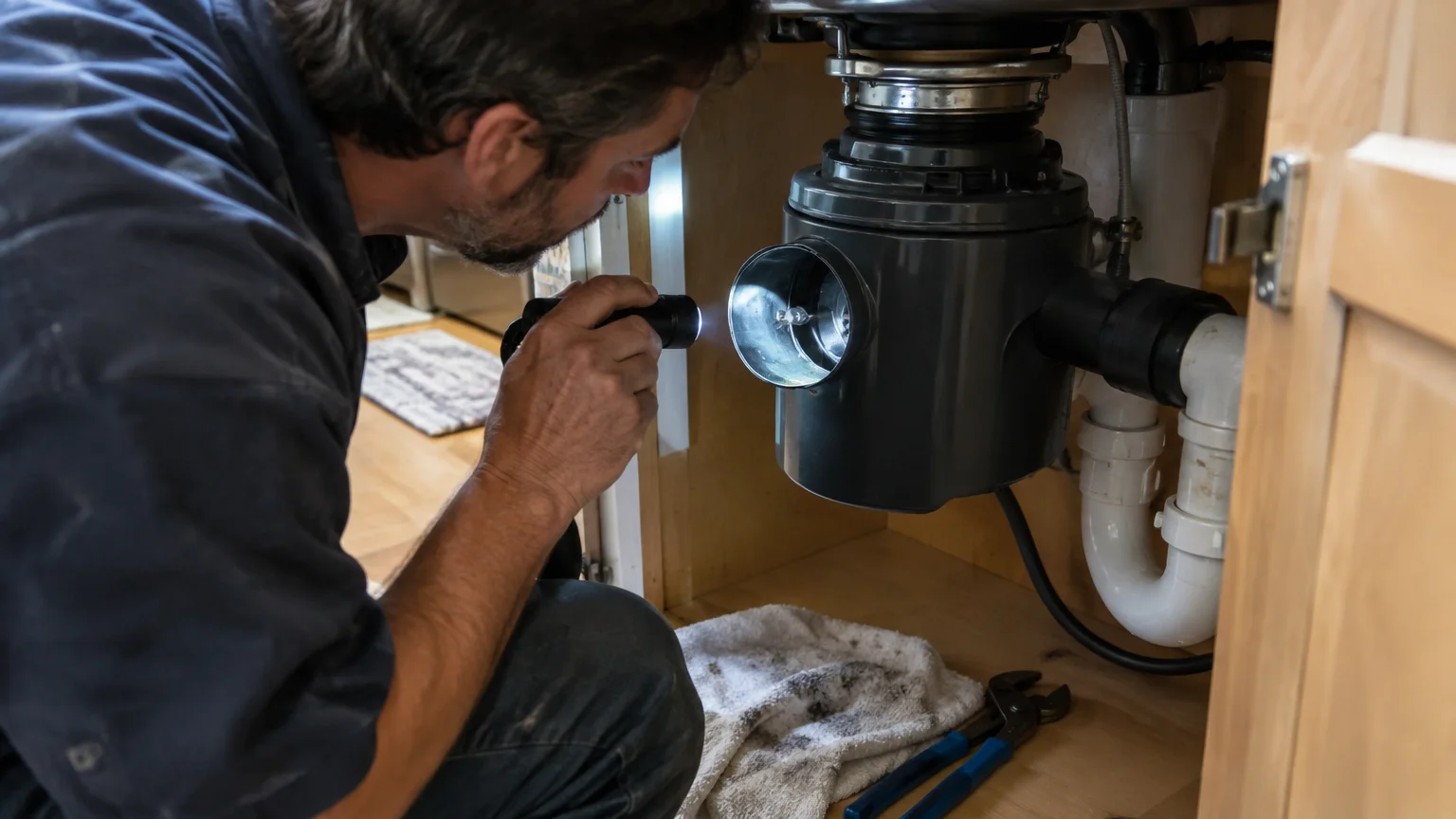
Keep water away from electrical parts. Do not pull out a plug with wet hands or remove an electrical cover. Never put your hand inside the disposal, even when it seems off. Use a flashlight to look down from above, and keep your face back from the drain.
Stop using the disposal if water leaks under the sink. If it is safe, move stored items away and protect nearby belongings. A leak near a power connection needs prompt care. Valparaiso Plumbing can help property owners decide when a trained professional should check the unit.
What should you check before trying to clear a jam?
First, find the disposal model and read its instructions. Then turn off the switch and follow the maker’s steps to cut power. Do not start if you cannot confirm the unit is safe to check. A careful look may show a loose object without putting your hand near the grinding parts.
Where are the reset button and turning point?
Many disposals have a small reset button on the bottom. Its place and use depend on the model. Some units also have a socket for a special wrench or hex key. Check the manual or label to make sure you have the right tool. Do not force a tool into a socket that does not fit.
Clear the space under the sink so you can see the bottom of the unit. Use a flashlight to look for the reset button, tool socket, or signs of a leak. Keep the disposal off while you look. Stop and call a professional if you see damaged wires, water near an outlet, or a cracked body.
What should stay out of the chamber?
Keep hands, fingers, spoons, and other tools out of the grinding chamber. Do not use a knife, screwdriver, or metal hook to reach for an item. These tools can slip, hurt you, or damage the unit. If you can see an object from above, wait until power is safely cut and the maker’s directions tell you what to do.
Only check the parts the instructions say are safe to check. Look for clear damage, note the model, and see if you can reach the power source without touching wet or damaged parts. Do not take the disposal apart to look for a jam. Inside the housing, sharp parts and electrical hazards can cause injury.
If the sink leaks or the drain is blocked, tell the plumber about that too. A plumber may need to check the disposal and nearby Kitchen Plumbing. Explain whether the unit hums, clicks, or stays quiet when you press the switch. Clear details help the plumber guide you toward a safe next step.
How can you safely free a jammed garbage disposal?
Only try to free a jam if the maker allows it and power is safely disconnected. Use the correct disposal wrench or hex key if the unit has a matching socket. Never reach inside the chamber. If the tool will not turn with gentle pressure, stop and arrange a professional check.
How do you use the maker’s wrench?
With power off, place the right wrench in the socket under the disposal. Follow the maker’s directions to move the grinding plate back and forth. Use gentle, steady pressure. Do not force the tool, add a longer handle, or try a different tool to make it turn.
If the plate moves, take out the wrench before restoring power. Look into the chamber with a flashlight, but keep your hands and tools out. Only remove a visible object in the way the instructions allow. If you cannot remove it safely, leave it for a plumber.
How do you check for an obstruction?
A flashlight may show a hard object near the top of the chamber. Do not put your fingers into the opening, even if the object seems easy to reach. Do not pour chemical drain cleaner into the disposal. Chemicals may splash or harm parts, and they will not free a jammed grinding plate.
After clearing a jam, follow the manual before you reconnect power. Run water only if the maker recommends it for a test. Stand clear of the opening and turn the unit on briefly. If it hums again, switch it off right away. Do not keep testing it over and over.
Some jams return because a part is worn or an object is still trapped. If the disposal will not turn with gentle wrench pressure, it needs a closer look. Taking it apart is not a safe home repair. Leave repairs inside the housing to a qualified professional.
How do you reset a garbage disposal that still will not spin?
Use the reset only after clearing the jam and letting the unit cool as the maker says. The reset button is an overload protector. It cuts power when the motor gets too hot. It will not remove a jam or fix a broken motor. If the unit hums again, turn it off.
When should you press the reset button?
Find the button by checking the manual or label on the disposal. Make sure the wall switch is off. Press the button only as the instructions say, and do not force it. If it will not stay in place or the breaker trips, stop. The unit may still have a jam or an electrical fault.
Do not press reset again and again to make the disposal run. Repeated trips point to a problem that needs care. A hot motor may need time to cool, but resetting will not help if the grinding plate is still stuck. Follow the maker’s advice rather than guessing how long to wait.
How can you test it safely?
When the instructions say it is safe, remove any wrench. Check that the chamber is clear without reaching inside. Restore power only if the plug, wires, and area are dry and undamaged. Run water if the manual says to, then switch the disposal on briefly while standing clear.
A disposal that runs smoothly may be ready for normal use. Stop it if you hear a hum, grinding sound, or repeated clicking. Also stop if water leaks under the sink or the breaker trips. Do not keep restarting it to see if the problem goes away.
If the unit stays quiet after a reset, that does not prove it is fixed. A loose connection, failed switch, or damaged motor may stop it from running. Do not open the electrical parts yourself. A plumber or electrician can check the cause and tell you whether repair or replacement is the safer choice.
When should you call a plumber or electrician?
Call a professional if the disposal still hums after safe checks, the jam will not move gently, or the reset keeps tripping. Get help for leaks, burning smells, damaged wires, smoke, or a breaker that trips again. Do not open the unit or touch exposed electrical parts.
What signs point to a larger problem?
A failed motor may hum without turning or give off a hot, burning smell. A wiring issue may trip the breaker or make the unit act in an unusual way. If the disposal leaks from its body, a seal or the housing may be damaged. These are not simple cleaning or reset jobs.
Jams that keep coming back may mean parts are worn or damaged. They may also mean items that should stay out of the unit are going down the drain. Stop the disposal if you hear a loud metal sound. A plumber can check the unit and nearby drain connections. An electrician may be needed if the switch, outlet, or wiring seems at fault.
What might a professional inspect?
A professional may check the power supply, switch, reset, motor, grinding parts, and drain connection. They can look for a jam without asking you to reach inside. If the disposal is damaged or worn out, they can explain whether repair or sink disposal installation is a better fit.
The right fix depends on the unit, the cause, and the nearby pipes. A new unit may be needed if the old one cannot be repaired safely. A plumber can also look for leaks that may harm the cabinet or sink. Tell them what you have already tried, including whether the reset button stayed in.
For homes and rental properties Valparaiso Plumbing can help assess disposal issues and related plumbing concerns. Tenants should tell the property owner about leaks or electrical concerns promptly. Do not use a unit that hums or smells hot while waiting for help.
How can you prevent a garbage disposal from humming and jamming?
Use the disposal only for food scraps that the maker says are safe. Run it as directed, keep hard items out, and stop if it makes an odd sound. Regular care can lower the chance of a jam, but it cannot prevent every problem.
What should not go down the disposal?
Keep items out if the manual says not to put them in the disposal. Hard pits, bones, utensils, and other objects can stop the grinding plate. Fibrous scraps and large amounts of food may also cause trouble in some models. If you are unsure, put the scraps in the trash or compost.
Feed suitable scraps in small amounts and follow the maker’s advice about water. Do not pour cooking grease into the sink because it can harden in pipes. Avoid harsh chemicals unless a professional or the maker says they are safe for your system. A clog may need Drain Cleaning, not repeated use of the disposal.
What routine care helps?
Keep the area under the sink dry and clear enough to spot a leak. Watch for new drips, odd sounds, slow drains, or changes in how the unit runs. Follow the care steps in the manual because different models may need different care. Do not take the disposal apart for routine cleaning.
If the disposal jams often, note what went into it and when the problem began. This may help show a pattern, such as hard scraps or a drain blockage. Stop using the unit if it hums, leaks, or trips the breaker. Early care may help prevent damage to the disposal and cabinet.
Key takeaways
- A hum often means the motor has power but cannot turn.
- Switch the disposal off quickly and never put a hand inside.
- Use only the maker’s tool and directions to clear a jam.
- Reset the unit only after the jam is cleared and it is safe.
- Call a professional for repeat trouble, leaks, heat, or electrical signs.
A humming disposal may have a simple jam, but repeated starts can make things worse. Safe checks are limited to the steps the maker allows. If the unit stays stuck or shows signs of damage, stop and get qualified help. Contact us to arrange a professional check through Valparaiso Plumbing.
Frequently Asked Questions
Can a humming garbage disposal cause damage?
Yes. A motor that keeps trying to turn while the plate is stuck can get too hot or become damaged. Switch the unit off as soon as it hums. Do not keep pressing the switch or resetting it. If the sound returns after a safe check, leave the disposal off and call a professional.
Can a homeowner repair a garbage disposal?
A homeowner can safely check the manual, turn off the unit, and use its approved wrench if power is disconnected as directed. Never reach into the chamber or open electrical parts. If the jam will not move gently, the reset keeps tripping, or there is a leak, call a professional.
How do you repair a garbage disposal that is jammed?
Start by turning it off and following the maker’s steps to disconnect power. If the unit has a matching wrench socket, use the correct tool gently. Do not force it or reach inside. If the grinding plate stays stuck, stop and arrange a professional check instead of taking the unit apart.
Should a disposal be replaced if it keeps jamming?
Not always. A jam may come from an item that should not have gone into the unit. But repeated jams can point to worn or damaged parts. A professional can check the motor, grinding plate, and drain connection. Repair or replacement depends on the unit’s condition and the cause.
Is sink disposal installation needed when a motor fails?
Not in every case. Some units can be repaired, while a badly damaged or worn unit may need replacement. A plumber can check the disposal, its electrical connection, and the sink drain before advising you. Do not install or wire a replacement unless you can do it safely and correctly.
If you are not sure what is wrong, having the unit checked can help you choose a safe next step. Valparaiso property owners can share what they noticed and which checks they tried.
If you are not sure what you are dealing with, it is worth having someone look at it before it turns into a bigger job. Get in touch with Valparaiso Plumbing today and we will tell you where you stand.