Commercial restroom fixture upgrades help businesses in Valparaiso improve hygiene, save water, and cut plumbing troubles. By updating toilets, urinals, faucets, and sinks, owners can reduce leaks, clogs, and water waste while giving staff and guests a cleaner, more modern restroom.
A store manager who steps into an old restroom often sees what customers see too: stained toilets, dripping faucets, and worn sinks. Even if the rest of the building looks sharp, that tired restroom sends the wrong signal. In many buildings around Valparaiso, the restroom gets heavy use every day but is one of the last areas to get real upgrades.
Table of Contents
- Why should businesses consider commercial restroom fixture upgrades?
- Which commercial restroom fixtures matter most for a professional image?
- How do you choose the right commercial toilets and urinals for your building?
- What should businesses look for in commercial faucets and sinks?
- How do plumbing codes and ADA requirements affect restroom fixture upgrades?
- What does the upgrade process for commercial restroom fixtures typically involve?
- How can businesses maximize long-term value from new restroom fixtures?
Why should businesses consider commercial restroom fixture upgrades?
Businesses should think about commercial restroom fixture upgrades because restrooms shape how people feel about the whole place. Modern fixtures look cleaner, work better, and use less water. They also help control leaks, cut water damage, and lower the chance of plumbing trouble that can close restrooms or even part of the building.
Older toilets, urinals, and faucets often use far more water than needed and clog more often. That means more service calls, more time spent on complaints, and more strain on drains and supply lines. Over time, this stress can lead to pipe wear, extra load on commercial water heaters, and a higher risk of hidden leaks in walls or under floors.
How outdated fixtures affect impressions and staff satisfaction
Guests and staff judge restroom cleanliness by what they see and touch. Stained bowls, loose seats, slow drains, and dripping faucets tell people that upkeep may be behind. Even when a restroom is cleaned often, worn fixtures can still look dirty or feel hard to use.
Staff notice these problems too. A restroom that is simple to clean, with strong flush valves and touchless faucets, saves time for cleaning crews. It also reduces daily headaches for people who use the space many times each shift. For offices, restaurants, schools, and medical spaces in Valparaiso, better restrooms can help staff feel that owners care about their comfort and safety.
Operational and maintenance benefits of modern fixtures
Modern toilets, urinals, faucets, and sinks are built to use less water and still work well. Water-efficient toilets and urinals with the EPA’s WaterSense label can cut flush volumes while keeping good performance, when they are set up with the right valves and piping.^watersense
Better fixtures can also lower wear on commercial water heaters and drain lines. Fewer clogs and leaks mean fewer calls for emergency plumbing and less risk of damage to walls, floors, and nearby tenant spaces. Over the years, these gains in day-to-day operation often matter more than the short term work of the upgrade.
Which commercial restroom fixtures matter most for a professional image?
The fixtures people notice first in a restroom are the ones they use all the time: toilets, urinals, faucets, and sinks. These core pieces set the tone for the whole space. When they look clean, feel solid, and work every time, people tend to trust that the rest of the plumbing and building systems are also in good shape.
In busy commercial spaces, details like water pressure, flush strength, and drain speed also shape the visit. A toilet that keeps running, a sink that splashes, or a faucet that is hard to turn on can annoy guests and add extra cleaning work. When the basics work smoothly, people spend less time in the restroom and walk out with a better impression of the business.
Toilets, urinals, and partitions: core elements guests notice first
Commercial toilets and urinals must handle heavy traffic without constant repair. Pressure-assisted or flushometer toilets give strong, steady flushes, which helps prevent repeat flushes and clogs. Solid partitions, well-placed grab bars, and good privacy screens also affect how safe and comfortable the room feels.
Urinals play a key role in men’s restrooms. Choices range from standard models to high-efficiency or waterless styles. When matched with the right drain layout and venting, they can control odors and reduce splashing. Durable, easy-to-clean partitions and hardware help each station stay private yet simple to wipe down.
Faucets, sinks, handwashing stations, and accessories that complete the space
Handwashing areas are where users face the mirror and see the whole restroom. Modern handwashing stations with well-sized sinks, smooth counters, and lined-up soap and towel dispensers help keep water in the bowl and off the floor. This layout also keeps lines moving during busy times.
Touchless faucets and soap dispensers cut down on shared touch points and help manage how much water each wash uses. Deep sinks and correct faucet height reduce splashing. Well-placed accessories like grab bars, hooks, and baby changing stations add safety and ease of use, especially in family and accessible restrooms.
How do you choose the right commercial toilets and urinals for your building?
Choosing the right toilets and urinals starts with how the restroom is used each day. A quiet office will need different fixtures than a school, stadium, or busy restaurant in Valparaiso. Owners should think about traffic, who uses the space, water supply, drain layout, and long-term repair needs when they pick fixtures.
The right mix of gravity toilets, pressure-assisted toilets, and flushometer valves depends on the building’s plumbing design. A commercial plumber can look at pipe sizes, venting, and water pressure to help avoid weak flushes, loud pipes, and repeat clogs.
Key decisions: flush valves, water efficiency, and performance
Flush valves control how much water moves through the toilet or urinal and how fast it flows. Many commercial fixtures use flushometer valves on the wall, either exposed or behind a panel. These can be manual or sensor-operated and must match the fixture’s rated flow to work well.
Water-saving toilets and urinals can cut total water use when they pair with the right valves and piping. In some buildings, swapping old high-volume toilets for modern models can reduce load on the sewer or septic system. But dropping flush volume too low in an older building may cause drain problems, so balance and good design matter.
Accessibility, traffic volume, and layout considerations
Every commercial restroom must balance capacity with comfort and privacy. Large spaces may need more toilets, urinals, and accessible stalls to handle rush times. Smaller restrooms may call for compact fixtures that still meet clearances in the plumbing and building code.
Accessibility is more than just a rule to follow. It affects how people with walkers, wheelchairs, or strollers move in the room. Proper seat heights, enough room to turn, and well-placed grab bars help lower fall risk and make the restroom easier for more people to use.
A commercial plumber can help Valparaiso Plumbing review toilet and urinal options, decide how many fixtures each restroom needs, plan where partitions should go, and route the drains so they tie into the main plumbing system with fewer future clogs.
What should businesses look for in commercial faucets and sinks?
Businesses should pick faucets and sinks that are tough, simple to clean, and right for how the restroom is used. A hospital, mall, or school restroom in Valparaiso may see hundreds of quick handwashes each day. Those spaces need fixtures that stand up to constant use and help people wash well without soaking the counter or floor.
Owners should also plan how to control water temperature. A mixing valve blends hot and cold water. A thermostatic mixing valve does this while holding a steady temperature to help prevent scalding. These devices work with commercial water heaters to give stable hot water at several fixtures at once.
Touchless vs. manual faucets: hygiene, convenience, and durability
Touchless faucets use sensors to start and stop water when hands are under the spout. This cuts down on shared touch points and helps limit how long the water runs. Many businesses choose touchless faucets in high-traffic restrooms for both hygiene and water savings.
Manual faucets, like lever or wrist-blade styles, still work well in many places. They are often easier to repair and do not need batteries or power for a sensor. For some properties, a mix of touchless faucets in public restrooms and manual faucets in staff areas is a good middle ground.
Sink sizes, materials, and mounting styles for different industries
Sink choice affects comfort and cleaning time. Deeper sink bowls help cut splashing and work better in restrooms where people fill water bottles or rinse items. Wide trough-style sinks with several faucets can work well in schools, arenas, and other places with crowd surges.
Materials like vitreous china, solid surface, and stainless steel each have strong points. Smooth, non-porous surfaces resist stains and make it easier to wipe and disinfect. Common mounting styles include wall-hung sinks, drop-in bowls set into counters, and integrated solid-surface tops with built-in basins.
In every case, sinks and faucets should match the building’s water heater capacity so hot water reaches the tap fast without overloading the heater. This is very important when restrooms share a commercial water heater with a kitchen, laundry, or other hot water users.
How do plumbing codes and ADA requirements affect restroom fixture upgrades?
Plumbing codes and ADA rules give the basic standards for safe, usable restrooms. They help set how many fixtures the building needs, where each fixture sits, how drains and vents are arranged, and how much floor space people using mobility devices must have. Any commercial restroom fixture upgrades should follow the plumbing, building, and accessibility rules that apply to that property.
Most places use the International Plumbing Code or Uniform Plumbing Code, often with local changes made by the city or state. These codes set pipe sizes, vent rules, trap arm lengths, and backflow protection needs. A licensed commercial plumber checks these details before and during a restroom upgrade.
Essential plumbing and building code issues to confirm before upgrading
Before changing fixtures, a plumber will check the water supply lines, drain lines, vents, and shutoff valves that serve the restroom. They confirm that pressure, temperature, and pipe sizing will support new toilets, urinals, and faucets without low pressure or loud, banging pipes.
They also check if backflow protection is in place to help keep dirty water from reaching drinking water lines. In some buildings, upgrades may also trigger checks under the building code, such as fire, air flow, or structural work.
Plumbing permits are often needed for commercial restroom projects in Valparaiso. Inspectors may want to see rough-in plumbing before walls are closed, and then carry out a final inspection once fixtures are in and working.
Meeting ADA accessibility standards for toilets, sinks, and clearances
The Americans with Disabilities Act (ADA) gives detailed rules for accessible restrooms, such as clear floor space, reach ranges, grab bar locations, and fixture heights.^ada Restroom upgrades must keep or improve accessibility; they cannot make it worse.
For toilets, this means correct seat height, centerline distance from the wall, and open space beside the toilet for a wheelchair transfer. For sinks, it includes knee clearance under the basin, counter height, and the ability to reach faucets and soap without strain.
Door swings, handles, mirrors, and other accessories also count. A commercial plumber working in Indiana should team up with designers or accessibility experts to make sure new fixtures and layouts stay within ADA rules and any added state or local codes.
What does the upgrade process for commercial restroom fixtures typically involve?
The upgrade process for commercial restroom fixtures usually starts with an assessment and ends with testing and final cleanup. Along the way, the owner, plumber, and sometimes a designer decide which fixtures to keep, what to replace, and whether piping or water heaters need changes to support the new setup.
The exact steps depend on the age of the building, how many restrooms it has, and whether spaces can shut down during work. Some projects can be done one restroom at a time to keep the others open. Others, such as full remodels in office towers or shopping centers, need tight schedules and careful planning.
Planning, assessment, and selecting the right commercial plumber
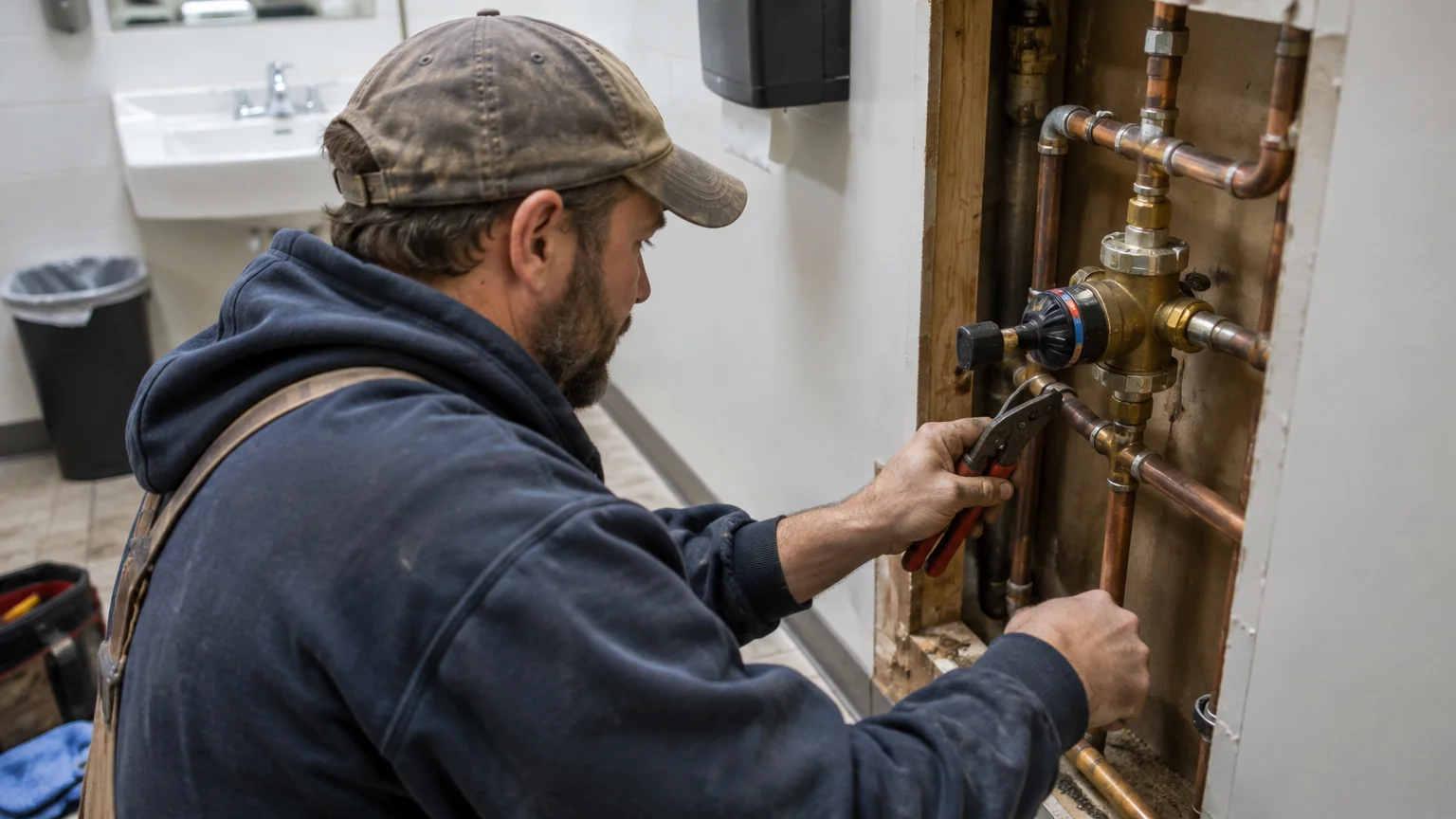
A commercial plumber starts by walking the space, checking existing fixtures, and looking at access to shutoff valves, risers, main drains, and the commercial water heater. They may open tiles in the ceiling or use access panels to see how pipes run between floors.
Together with the owner or property manager, they talk through goals: better image, lower water use, fewer clogs, better accessibility, or a mix of all four. From there, they suggest fixture brands, flush valves, faucet types, and layout changes that fit the building and how people use it.
Choosing the right plumber means checking for proper licensing, insurance, and experience with commercial plumbing and ADA-friendly restroom upgrades. For complex projects that also touch gas-fired water heaters or boiler systems, it may call for help from a gas line plumbing specialist.
Scheduling work, minimizing downtime, and coordinating other trades
Once fixtures and scope are set, the team agrees on timing. Work often happens at night, on weekends, or during slow seasons to limit restroom downtime. In some buildings, crews shut down one restroom stack at a time so people always have access to at least one working restroom.
Commercial restroom projects often need coordination with other trades, including electricians for lighting and hand dryers, carpenters for partitions and framing, and tile or flooring installers. A clear plan and schedule help avoid delays and surprise changes.
In the final stage, the plumber tests every toilet, urinal, faucet, and drain for leaks, proper operation, and good hot water delivery. They check that toilets do not keep running and that water shuts off fully at each faucet. Any issues get fixed before the restroom opens back up to staff and guests.
Frequently Asked Questions
How often should a commercial restroom be upgraded?
Many commercial restrooms get a refresh every decade or so, but it depends on use and wear. Owners should think about upgrades sooner if fixtures clog often, leak, look very worn, or no longer meet plumbing code or ADA rules. A quick inspection from a commercial plumber can help set the right timing.
What causes low water pressure in commercial bathrooms?
Low water pressure can come from small pipes, clogged supply lines, partly closed valves, worn pressure regulators, or problems with the main building supply. Old galvanized steel pipes can also build up rust and restrict flow. A plumber will test pressure at several points and track the problem back to the most likely cause.
Why does a toilet keep running in a commercial restroom?
A toilet that keeps running often has trouble with the flush valve, flapper, or fill valve. Worn seals or parts that are not set right let water flow from the tank or flushometer into the bowl nonstop. This wastes water and can stress the plumbing, so it should be fixed soon by cleaning or replacing parts.
Can businesses safely handle any restroom repairs themselves?
Staff can safely do simple jobs like tightening loose seats, cleaning aerators, clearing surface clogs with a plunger, and checking for clear signs of leaks. Any work that calls for opening walls, changing valves, changing gas or electric water heater settings, or cutting into pipes should go to a licensed commercial plumber.
Do commercial restroom upgrades affect the water heater?
Yes. New fixtures can change how much hot water is used at once and how fast. Low-flow faucets and efficient toilets may lower total demand, but adding more restrooms or showers can raise it again. A plumber will compare fixture counts to the commercial water heater size to confirm it can keep up.
How can businesses maximize long-term value from new restroom fixtures?
Businesses can get the most long-term value from new restroom fixtures by pairing them with simple, steady upkeep and smart water use. Good habits keep fixtures looking new, help prevent leaks, and support even hot water delivery to all handwashing stations and showers that share the same system.
Clear cleaning plans, quick repairs, and regular checks of valves and seals will do more for fixture life than any single new feature. A little attention each month can greatly lower the chance of surprise plumbing emergencies later and cut the need for major drain repair.
Key takeaways
Smart maintenance habits make a big difference. Simple steps include:
- Walkthrough checks to look for drips, slow drains, or toilets that keep running.
- Cleaning aerators and strainers on faucets and shower heads to keep water flow even.
- Listening for hissing or running water when restrooms are empty, which can point to hidden leaks.
- Checking water heater settings so temperatures stay safe and steady at all fixtures.
Water and energy-saving strategies also matter. WaterSense-labeled fixtures, well-set occupancy sensors, and timed flush valves can all trim wasted water.^watersense2 Insulating hot water lines and pairing fixtures with the right commercial water heater type can help hot water arrive faster and reduce heat loss.
Conclusion
Commercial restroom fixture upgrades are about much more than looks. They help protect the building, support comfort for staff and visitors, and work hand in hand with the water heater and drain system. Well-chosen toilets, urinals, faucets, and sinks can cut water use while still giving strong, reliable performance day after day.
For property owners and managers, working with an experienced commercial plumbing team like Valparaiso Plumbing keeps the process on track from early planning through final testing. To explore options for your building or plan a staged upgrade that fits your schedule, Contact us and talk with Valparaiso Plumbing about commercial restroom solutions that match your needs.
[^watersense]: EPA WaterSense is a voluntary program that helps identify water-efficient products.
[^ada]: The U.S. Department of Justice publishes the 2010 ADA Standards for Accessible Design.
[^watersense2]: The EPA provides WaterSense guidance for commercial buildings and facilities.
If you are not sure what you are dealing with, it is worth having someone look at it before it turns into a bigger job. Get in touch with Valparaiso Plumbing today and we will tell you where you stand.