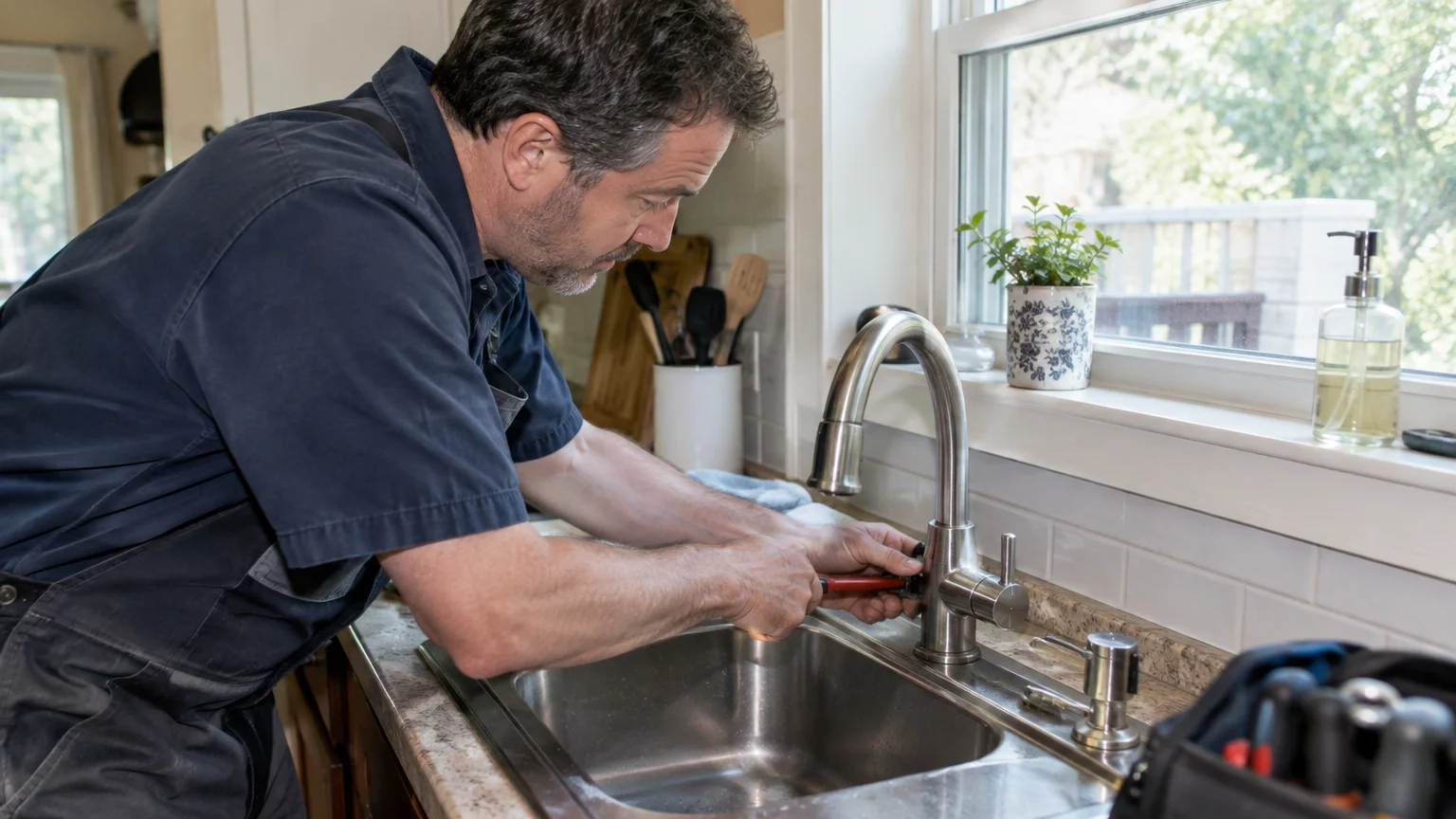
Leaking faucet repair means finding why water still drips when the tap is off, then fixing worn parts or changing the faucet so the leak stops. The total repair cost depends on faucet type, how hard the area is to reach, and whether water has already caused damage around the sink or walls.
A slow drip at the kitchen sink in your Valparaiso home is easy to tune out. Then the sound grows, the handle wiggles, and the cabinet floor shows water spots. That small leak is now a real plumbing problem that can harm wood, drywall, and the finishes you see every day.
This guide walks through leaking faucet repair in clear steps. You will learn how to tell a small drip from a serious issue, what usually causes leaks, which fixes many owners can handle, and when a plumber from Valparaiso Plumbing should take over to protect your place. These tips work for houses, rentals, and small local businesses.
Table of Contents
- What counts as a leaking faucet problem that needs repair?
- Why is my faucet leaking in the first place?
- What types of faucets leak differently and how does that affect repair?
- Is it worth repairing a leaking faucet or should I replace it?
- How much does leaking faucet repair usually cost?
- Can I fix a leaking faucet myself or do I need a plumber?
- What tools and parts are needed for basic leaking faucet repair?
- How do you repair a leaking faucet step by step?
- How can I prevent my faucet from leaking again after it’s fixed?
- When does a leaking faucet signal a bigger plumbing problem?
- Frequently Asked Questions
- Key takeaways
- Conclusion
What counts as a leaking faucet problem that needs repair?
A leaking faucet is more than a small noise. It is any faucet that lets water drip, stream, or seep when the handle is in the off spot. In sinks, tubs, showers, and utility rooms, even a slow drip means parts inside the faucet are worn, loose, or damaged.
Kitchen sinks often start with a drip from the spout. Bathroom faucets may leak around the base of the handle or where the spout meets the sink. Laundry and utility sinks can drip from hose bibs, side sprays, or fittings under the sink. All of these are real faucet leaks.
Some leaks are easy to see. Others hide and only show as stains, soft drywall, or a musty smell. A faucet that only lets out a drop every few seconds is still a leak and still wastes water. The United States Environmental Protection Agency says that household leaks can waste a lot of water per home each year when people do not fix them [EPA WaterSense].
The goal is to sort out a simple drip from a bigger problem. A small leak that only comes from the spout and stops when you move the handle a bit is often due to a worn washer or cartridge. A leak that runs into the cabinet, soaks the wall, or shows as a wet ceiling below is more serious and needs fast care.
Common types of faucet leaks in kitchens, bathrooms, and utility rooms
Most homes in Indiana see the same leak patterns over time:
- Steady drips from the end of the spout
- Drips or puddles at the base of the faucet
- Water that seeps out from around one or both handles
- Water that leaks from supply connections below the sink
In the kitchen, pull-down and pull-out spray faucets can leak where the hose meets the spray head, or where the hose rubs on sharp cabinet edges. A garbage disposal under the sink may also leak where it ties into the drain, which many owners think is a faucet leak at first.
In bathrooms, common leaks come from centerset or widespread sink faucets, tub spouts that drip after the shower is turned off, and shower valves hidden in the wall. Laundry rooms and garages often have old utility faucets with worn packing nuts that let water drip all the time.
How to tell the difference between a minor drip and a serious plumbing issue
A minor drip is steady but slow. It comes from the faucet spout or near a handle, but it does not soak cabinets, drywall, or floors. You might see a ring in the sink or tub where drops hit, but no standing water or stains below.
A serious leak leaves clear signs. You may see damp or swollen wood in the cabinet, chipped or flaking finish on the faucet body, or yellow or brown water marks on the ceiling in the room under the sink. You might also notice low water pressure in the house, banging pipes, or stains near shutoff valves.
If turning the handle harder or moving it side to side changes the drip a lot, the inside parts are likely very worn. If water keeps dripping even after the hot and cold shutoff valves under the sink are fully off, one or both valves may not be stopping flow. At that point, a full plumbing check from Valparaiso Plumbing is the safest choice.
Why is my faucet leaking in the first place?
Most faucet leaks start with small worn parts. Inside every faucet there are pieces that hold back water until you turn the handle. Over time, water pressure, grit in the water, and daily use wear these parts down so they cannot seal well.
Older compression faucets use rubber washers that press against valve seats to stop water. After years of use, these washers get hard, crack, or wear thin. Then water sneaks by and drips even when the faucet is turned all the way off.
Newer faucets use cartridges, ceramic discs, or rubber seals called O-rings. A cartridge is a removable part that moves up and down or side to side to control water. O-rings are small rubber circles that seal space between metal parts. When any of these dry out, crack, or break, water can escape.
Wear and tear on washers, cartridges, and O-rings explained
Think of a faucet washer or O-ring like a soft rubber door seal. It has to stay flexible to press tight against metal parts. Hot water, strong cleaners, and minerals in hard water all make this rubber stiff and brittle over time.
Cartridges have several seals and moving pieces built inside them. When grit from old pipes or hard water gets in, these parts can scratch and no longer fit tight. This makes it harder to turn the faucet off all the way and leads to drips.
Ceramic disc faucets have two hard, flat ceramic pieces that slide on each other. They are very tough. But if debris gets between them, tiny chips can form and let water pass. A failed ceramic disc often shows up as a handle that feels rough, sticky, or hard to move.
Other hidden causes: water pressure, hard water, and installation mistakes
High water pressure puts extra strain on faucet parts all day and night. If pressure is too high, even a new faucet can start to drip or leak sooner than you expect. A simple pressure test by a plumber can show if this is part of the problem.
Hard water means the water has a lot of calcium and magnesium minerals. These minerals leave white scale on faucet spouts and inside cartridges. Over time, this scale makes handles stiff, clogs small openings, and harms seals.
Installation mistakes are another hidden cause. A faucet that was not lined up, tightened, or sealed the right way may leak soon after it is put in. Cross-threaded connections, missing or pinched gaskets, and poorly sealed drain parts can all cause water where it should not be.
Sometimes, leaks that look like faucet issues are actually tied to other parts of the system, such as Toilet Repair needs, Water Heater Repair problems, or gas line issues that need professional help. A full look at the plumbing setup in your Valparaiso property helps uncover these links.
What types of faucets leak differently and how does that affect repair?
Different faucet designs fail in different ways. Knowing what type of faucet is in your kitchen, bath, or laundry room helps you guess what is wrong and how hard leaking faucet repair will be. The four main types are compression, cartridge, ball, and ceramic disc.
Compression faucets are older designs with two handles. You turn one for hot and one for cold. Inside, each handle presses a washer against a valve seat. These faucets often drip from worn washers, and handles can get hard to turn or may not shut the water off fully.
Cartridge faucets can have one handle or two. They use a replaceable cartridge for each handle or for both hot and cold. Ball faucets have a single handle and use a metal or plastic ball with small seals and springs. Ceramic disc faucets usually have a wide, short handle and a very smooth feel.
Compression, cartridge, ball, and ceramic disc faucets: how each one works
- Compression faucets work like screwing a lid onto a jar. When you turn the handle down, it presses the washer tight to stop water. Loosen it and water flows. Most repairs focus on new washers, valve seats, or packing around the stem.
- Cartridge faucets work like a sliding plug. Inside, the cartridge moves to open or close water paths. When it fails, you replace the whole cartridge. This repair is often simpler than rebuilding a compression faucet, as long as you match the exact part.
- Ball faucets use a hollow ball with holes that line up with hot and cold inlets. Springs and small rubber seats press against the ball. When these wear out, leaks often show up around the spout base or handle. Kits with seats, springs, and seals are common.
- Ceramic disc faucets let water flow when two flat discs line up. They are very durable and handle hard water better than many other types. When they leak, the fix often means replacing the full cartridge that holds the discs and seals.
Which faucet styles are usually worth repairing versus replacing
Compression faucets are simple and often worth repairing if they are in decent shape and match the room style. Very old or badly corroded units may not be worth the time.
Cartridge and ceramic disc faucets are usually good repair candidates when they are still fairly new, match other fixtures, or come from higher-end brands. A new cartridge can add years of use. If the finish is pitted or the spout is cracked, full replacement makes more sense.
Ball faucets are less common in new homes today. When a ball faucet is very old, it may be smarter to swap it for a modern cartridge or ceramic disc faucet that uses less water and is easier to work on.
Owners in the Valparaiso area should also think about future plans. If a kitchen or bath remodel is coming soon, a fast, simple repair may be enough for now. If the room will stay the same for years, upgrading to a good, water-saving faucet can be a smart long-term choice.
Is it worth repairing a leaking faucet or should I replace it?
The choice between repair and replacement depends on age, condition, style, how easy parts are to get, and how often the faucet has leaked before. A plumber will look at all of these, plus signs of water damage, when they share options.
Start with the age of the faucet. A newer faucet that matches the rest of the room and has not needed many past repairs is almost always worth fixing. Replacing a worn washer, cartridge, or seal can stop the leak and protect the sink, counter, and cabinet.
Very old faucets, especially those with corroded bodies or stiff handles, are harder to repair well. Screws seize, parts break during removal, and you may not be able to match the trim. If parts are no longer made or are hard to find, replacement is often more practical.
Key questions to decide between repair and replacement for homeowners
Homeowners and landlords can walk through a simple list before they decide. Helpful questions include:
- How old is the faucet and does it still look good?
- Have I repaired this same faucet leak more than once?
- Are quality parts easy to find for this brand and model?
- Is there any rust, pitting, or cracking on the faucet body?
- Is there hidden water damage under or behind the sink?
If the faucet is fairly new, in good shape, and this is the first problem, repair is usually the smart call. If there is clear damage or a pattern of repeat leaks, a new faucet often gives better value and fewer headaches.
Business owners also look at looks and downtime. In a restaurant, office, or rental unit, a faucet that leaks often or looks worn can hurt comfort and the sense of cleanliness. In those places, upgrading to sturdy commercial fixtures can cut the number of plumbing repair visits.
When upgrading to a new water-efficient faucet makes more sense long term
Modern faucets come in many water-saving designs. When you choose one, you can compare its water-use rating, how it fits your sink, and what the maker says about care. Upgrading during a leak repair can lower long-term water use and reduce future leaks.
A new faucet can also handle hard water better and may include features like ceramic disc valves and flexible supply lines. This can mean fewer leaks, smoother handles, and less risk of sudden failures.
If counters, sinks, and backsplashes are also old, replacing the faucet as part of a small Kitchen Plumbing or bathroom update may be the most practical way to get a fresh, leak-resistant setup. A plumber can help match faucet style, finish, and number of holes to the sink you already have.
Owners in Valparaiso should also think about future buyers. Newer, efficient faucets are small upgrades that help homes and rentals feel well cared for to tenants and first-time buyers.
How much does leaking faucet repair usually cost?
Leaking faucet repair is often one of the simpler plumbing repair jobs, but what you pay can still change a lot. The main factors are the faucet type, how easy it is to reach, the cost of parts, and whether there is any hidden damage that also needs work.
A basic drip from a compression or cartridge faucet with good access is usually on the simpler end. Swapping a washer, O-ring, or cartridge tends to be an easier job than finding leaks in walls or ceilings. Specialty faucets, wall-mounted units, and tub or shower valves usually take more time and care.
High-end faucets with custom parts often cost more to fix because parts are more special and may need to be ordered. Older faucets with heavy corrosion may take longer to take apart. That extra time adds to the overall job even though the actual pieces are small.
Main factors that influence the price of fixing a leak
When a plumber from Valparaiso Plumbing checks a leak, they look at several points. These include:
- Faucet type and brand (standard parts or special parts)
- Location and access (open cabinet or tight, hidden space)
- Condition of shutoff valves and supply lines
- Amount of scale, rust, or corrosion present
- Extra repairs needed (like Leaks & Burst Pipes work, drywall, or cabinet fixes)
A simple faucet repair with no water damage tends to be one of the lighter plumbing jobs. Work that means cutting walls, repairing damaged wood, or changing several valves is closer to a large pipe repair project.
Compared to full Kitchen Plumbing remodels or major Water Heater Repair jobs, most faucet repairs are smaller and shorter. Still, the only way to know the exact repair costs for your Valparaiso home or business is to have a plumber inspect the faucet and give a written quote for that exact situation.
How faucet repair compares with full replacement and other plumbing jobs
Fixing a leaking faucet is usually less costly than replacing the whole faucet, especially for mid-range models that still look and work well. Replacement adds the cost of the new faucet and more labor to remove the old one and set the new one.
Full faucet replacement may still be the better value when an old faucet has many problems at once, such as leaks, low flow, and worn finish. In these cases, paying once for removal and installation can make more sense than several small visits over time.
Compared with major work, like replacing long pipe runs, doing heavy drain repair, fixing serious gas leaks, or doing a large toilet project, faucet jobs sit on the lighter side. But they still matter. Quick leaking faucet repair helps stop extra water damage that could lead to bigger, more costly work later.
Can I fix a leaking faucet myself or do I need a plumber?
Many small faucet leaks are within reach for handy homeowners and tenants. If you can safely shut off water, use basic tools, and follow simple steps, you may be able to stop a simple drip on your own.
Safe DIY work includes changing faucet aerators, tightening loose handles, and replacing basic O-rings or washers on easy-to-reach faucets. These tasks do not involve cutting pipes or working near gas, and they stay outside walls and ceilings.
More complex leaks need a qualified plumber. When leaks involve hidden pipes, main shutoff valves, or signs of structural damage, professional training and tools are needed to find and fix the root cause without making things worse.
Simple DIY leaking faucet repairs most homeowners can handle safely
There are a few basic steps most homeowners can take to help with minor dripping. These include:
- Turning off the local shutoff valves under the sink
- Plugging the sink drain so small parts do not fall in
- Removing and cleaning the aerator on the faucet spout
- Gently tightening loose handle screws or trim caps
- Replacing simple rubber washers or O-rings when the faucet design is clear
You should always take photos before taking things apart. This makes it easier to put parts back in the right order. It also helps to lay out small pieces in the order they came off.
Simple checks like looking for low water pressure in the home or resetting a garbage disposal can also be safe DIY steps when done with care and clear directions. If you smell gas or think there might be a gas leak, avoid flames and switches, leave the area, and contact the gas company or emergency services from a safe place.
Clear signs you should call a professional plumber right away
Some warning signs show that a leak is beyond a simple fix. Call Emergency Plumbing help if you see any of these:
- Water that will not stop even after local valves are shut off
- Warm or soft spots on floors, walls, or ceilings
- A running toilet, faucets, and other fixtures acting up at the same time
- Signs of mold, mildew, or strong musty smells
- Corroded or crumbling shutoff valves you cannot safely turn
If you start a repair and find broken parts you cannot remove, damaged threads, or pieces you cannot name, it is also time to stop and call a pro. For rental homes or commercial spaces in Valparaiso, owners should use qualified plumbers and follow building rules to help keep tenants safe.
What tools and parts are needed for basic leaking faucet repair?
Before starting any faucet repair, it is smart to gather tools and parts. Having what you need ready helps avoid mid-job trips to the store and lowers the chance of leaving the faucet taken apart overnight.
Different faucet types need different parts, but many basic hand tools are the same. A simple kit kept in a Valparaiso home or small business can handle many basic jobs and make emergency shutoffs faster and safer.
It is also wise to know how to turn off the main water supply to the building. This gives a backup plan if old or stuck shutoff valves under a sink fail or start to leak during the repair.
Essential hand tools for safe faucet repair and shutoff
Helpful tools for most leaking faucet repair jobs include:
- Adjustable wrench or basin wrench for hard-to-reach nuts
- Phillips and flathead screwdrivers for handle screws and trim
- Allen (hex) keys for set screws on many modern faucets
- Pliers for gripping parts and pulling cartridges
- Utility knife for cutting old sealant around faucet bases
- Bucket, towels, and a flashlight to catch and see leaks clearly
A non-contact voltage tester can also help near garbage disposals and under-sink outlets, to make sure power is off before you work in tight spots. Safety glasses and light gloves help protect eyes and hands from debris and sharp edges.
Common replacement parts for different faucet types and how to match them
The most common replacement parts for faucet leaks are washers, O-rings, cartridges, ceramic disc cartridges, and seat-and-spring kits. Matching parts to your faucet is key. Taking the old part to the plumbing aisle or supply house often works best.
For compression faucets, you will likely need new rubber washers, valve seats, and maybe packing material for the stem. For cartridge faucets, you replace the full cartridge that controls water flow. Ball faucets often use kits that include a new ball, springs, and seals.
Ceramic disc faucets may use brand-specific cartridges. Many brands print their name on the faucet body, under the handle, or on the trim plate. Writing down the brand, rough age, and any model numbers helps you find the right part.
Landlords and property managers in the wider Valparaiso area often keep a small box of common parts for fixtures used across their buildings. This can cut downtime when a leak shows up in a tenant’s unit and help keep Toilet Repair and faucet calls faster and smoother.
How do you repair a leaking faucet step by step?
Every faucet model is a little different, but the basic steps to repair a leak are similar. First, you find where the leak is coming from. Then you shut off water, take the faucet apart in order, replace worn parts, and put it back together.
During each step, move slowly and avoid forcing stuck parts. Many faucet bodies are made from softer metals that can scratch or bend if handled roughly. Take photos as you go and keep pieces in order on a clean towel.
If at any point you feel unsure, or if the faucet will not come apart without serious force, stop the DIY attempt and call a plumber. It is easier for a pro to help before parts break than after.
Step-by-step process to diagnose where the faucet leak is coming from
- Watch the leak closely. Note if water drips from the spout, around a handle, or under the sink.
- Dry the area. Use a towel to dry the faucet, handles, and cabinet below.
- Turn the faucet on and off. See if the leak changes when the handle moves.
- Check under the sink. Look at supply lines, shutoff valves, and joints for moisture.
- Check related fixtures. If other fixtures have issues, like a toilet that keeps running or very low water pressure, the problem may be in the wider plumbing system.
- Decide on access. If the leak is clearly from the faucet body or handle, you can try a repair. If it seems to come from inside a wall or deep behind the sink, call a plumber.
Step-by-step process to replace worn cartridges, washers, and seals
- Shut off water. Close the hot and cold shutoff valves under the sink. Open the faucet to release pressure.
- Plug the drain. Use a stopper or cloth so small parts do not fall in.
- Remove handle caps and screws. Use a small screwdriver or Allen key. Lift off handles gently.
- Take off trim and nuts. Use wrenches and pliers as needed, being careful not to scratch the finish.
- Remove the old cartridge, stem, washer, or O-rings. Note their position and which side faces which way.
- Clean the faucet body. Wipe away debris and mineral scale. Do not scratch smooth sealing surfaces.
- Install new parts. Place the new washer, O-rings, or cartridge in the same way as the old parts.
- Reassemble the faucet. Reverse the steps, tightening nuts snugly but not too hard.
- Turn water back on. Open shutoff valves slowly while watching for leaks.
- Test the faucet. Run water hot and cold, then shut it off and watch for drips.
If the leak is gone and handles move smoothly, the repair likely worked. If dripping continues, or if new leaks show up under the sink, you may need a deeper inspection or professional help.
How can I prevent my faucet from leaking again after it’s fixed?
Stopping future leaks starts with gentle use and simple care. Turning faucets off firmly but not too hard, keeping aerators clean, and watching for early signs of trouble all help extend the life of washers, cartridges, and seals.
Water quality and pressure also play a big role. Hard water and high pressure speed up wear on faucet parts, water heater parts, and toilet fill valves. Simple checks and basic equipment can help control these stresses and protect your fixtures.
For busy homes, rentals, and light commercial spaces in Valparaiso, a regular plumbing checkup can catch small leaks before they cause high water bills or damage. This is especially helpful when there are many sinks and toilets to watch.
Routine maintenance habits that protect faucets and internal parts
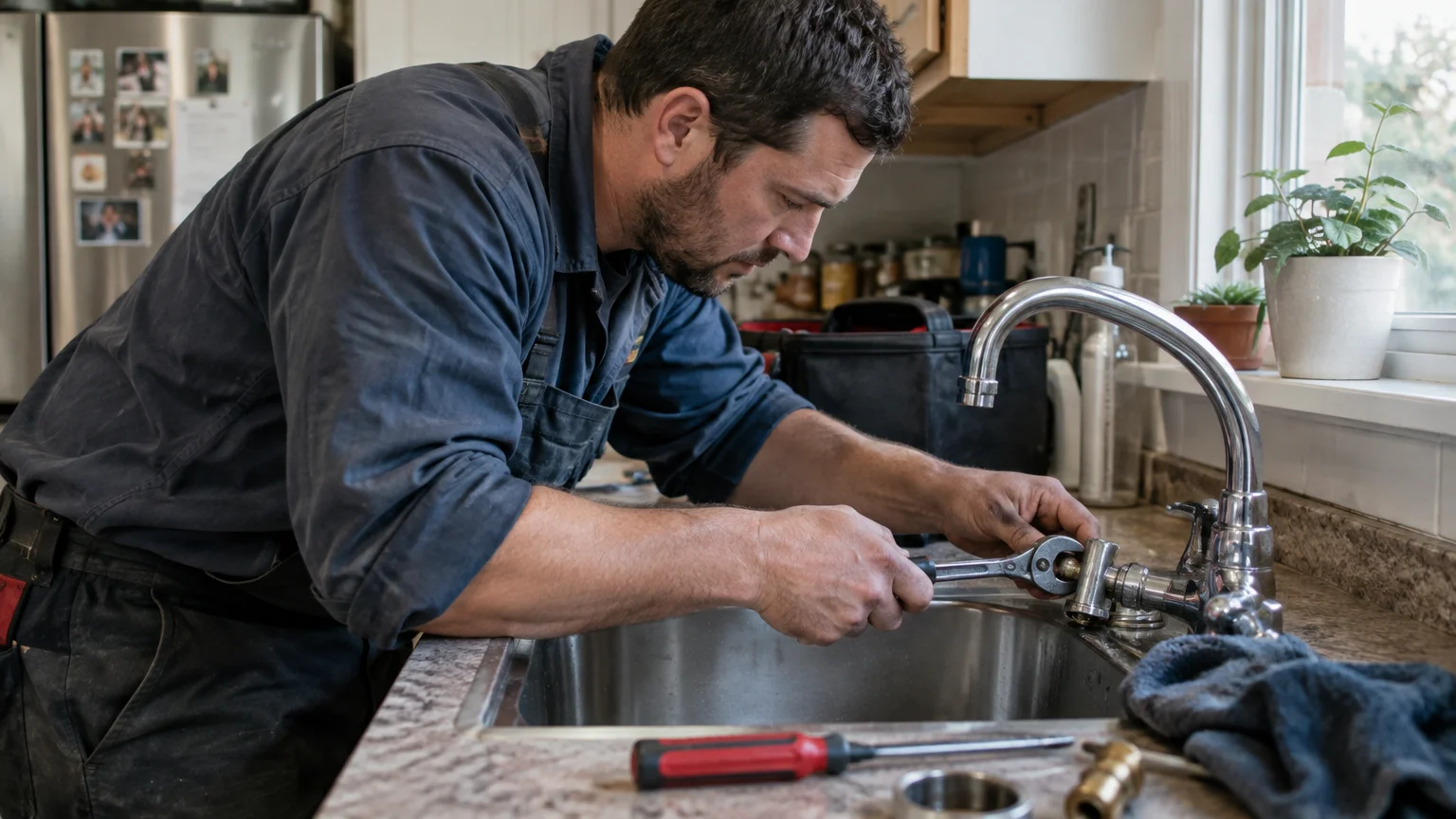
A few easy habits can keep faucets in better shape:
- Clean aerators every few months. Unscrew them, rinse out debris, and screw them back on.
- Wipe away scale. Use a mild cleaner to remove mineral buildup on spouts.
- Check handles for looseness. Tighten small screws before wobble gets worse.
- Open and close valves gently. Avoid slamming handles closed.
- Look under sinks twice a year. Watch for damp spots, staining, or musty smells.
When you notice changes, such as a faucet that starts to drip sometimes or a handle that gets harder to move, handle these early signs right away. Early care is almost always easier and less costly than waiting.
Water quality, pressure control, and other system checks that reduce leaks
Using a simple whole-house filter or softener can reduce grit and minerals that scratch faucet parts. Good filtration also helps protect water heaters, shower valves, garbage disposals, and other fixtures from early wear.
A pressure-reducing valve, where allowed and suitable, can help keep water pressure in a safe range for fixtures. A plumber can test pressure at an outdoor spigot or laundry faucet and advise if control equipment is needed.
Other checks include making sure water heater temperature and pressure relief valves work, having a qualified pro inspect gas piping when it is near plumbing work, and watching for signs of leaks in walls or slabs. Many of these fit well into a yearly plumbing inspection visit.
When Toilet Repair, Water Heater Repair, and leaking faucet repair are handled as part of an overall plan, the whole plumbing system in a Valparaiso property tends to work more smoothly and with fewer surprises.
When does a leaking faucet signal a bigger plumbing problem?
Sometimes a faucet leak is just a faucet issue. Other times, it is a hint that the plumbing system has larger problems, such as failing pipes, worn shutoff valves, or supply line issues. Knowing these warning signs helps owners act early.
If several fixtures act up at once, there is likely more going on than one worn washer. For example, a kitchen faucet drip at the same time a toilet keeps running and a shower loses pressure can point to pressure problems or aging pipes.
Leaks that stain ceilings or walls, or that show up near electrical gear, are also red flags. These cases call for quick professional help to avoid damage and safety risks.
Warning signs the leak is tied to supply lines, valves, or hidden pipe damage
Watch for these signs that a leaking faucet may be part of a larger issue:
- Wet or swollen cabinets and baseboards near the sink
- Water stains on ceilings or walls below or behind the faucet
- Rust or green corrosion on visible pipe joints and valves
- Very low water pressure in the home or sudden changes in flow
- Sounds of water running even when all fixtures are off
These clues can point to failing supply lines, loose or damaged shutoff valves, or leaks in copper, PEX, or galvanized piping. In older homes, it may also hint at outdated materials that need close inspection.
How a local plumbing expert can inspect, diagnose, and protect your property
A plumbing professional does more than swap parts. They look at how all fixtures, shutoff valves, and pipes work together. For a leaking faucet, they may test water pressure, inspect under-sink valves, and use moisture meters or cameras to look for hidden leaks.
Valparaiso Plumbing can help homeowners, landlords, and small business owners choose what fits best: focused leaking faucet repair, wider Leaks & Burst Pipes work, or fixture upgrades. They can also advise when it is time to repair a toilet fill valve, handle ongoing garbage disposal unit repair needs, or plan larger pipe repair work.
With the right diagnosis, property owners can set priorities, avoid repeat leaks, and protect finishes, contents, and structure from water damage.
Frequently Asked Questions
Why does my faucet keep dripping after I turn it off?
A faucet that keeps dripping after shutoff usually has worn inside parts. Washers, cartridges, or O-rings are no longer sealing fully, so a little water slips by. High water pressure or hard water can speed up this wear. Replacing the worn parts often solves the leak.
Can a leaking faucet increase my water bill a lot?
Yes. Even a slow drip adds up over time. Each small drop is treated water that runs down the drain. Over weeks and months, that wasted water can raise bills more than many owners expect. Fixing leaking faucet repair issues early helps cut waste and extra cost.
Is it safe to use my sink if the faucet is leaking from the base?
Using a sink while a faucet leaks from the base is risky. Water can run under the faucet, into the cabinet, and down into walls or floors. This hidden moisture can damage wood and drywall and may lead to mold growth. It is best to pause and get the leak fixed.
How do I know if I should repair or replace my old faucet?
Look at age, condition, and history. If the faucet is newer, in good shape, and this is the first leak, repair often makes sense. If it is very old, corroded, hard to use, or needs frequent fixes, replacement is often the better long-term choice.
Could other plumbing issues be linked to my leaking faucet?
Yes. A leaking faucet can be a sign of high water pressure, aging supply lines, or shutoff valves that are starting to fail. If you also notice low water pressure, toilets that keep running, or other leaks, a full plumbing system check is a smart next step.
Key takeaways
- A leaking faucet is more than a nuisance; it is a real plumbing problem that can damage cabinets, walls, and ceilings over time.
- Most leaks come from worn washers, cartridges, and seals, but high pressure, hard water, and bad installation can also play a part.
- Simple leaks on easy-to-reach faucets may be DIY-friendly, while hidden or widespread issues call for a qualified plumber.
- Regular checks, gentle faucet use, and good water quality help prevent repeat leaks and protect the whole plumbing system.
- Fast leaking faucet repair, together with timely Toilet Repair and Water Heater Repair, keeps homes and businesses safer and more comfortable.
Conclusion
Leaking faucet repair is one of the most common plumbing needs for homes, rentals, and small businesses, but it also touches many parts of the wider plumbing system. By learning how to spot serious leaks, handle simple care, and know when to call a pro, property owners in Valparaiso can protect finishes, avoid mold, and cut water waste.
If you are not sure what you are dealing with, it is worth having someone look at it before it turns into a bigger job. Get in touch with Valparaiso Plumbing today and we will tell you where you stand.