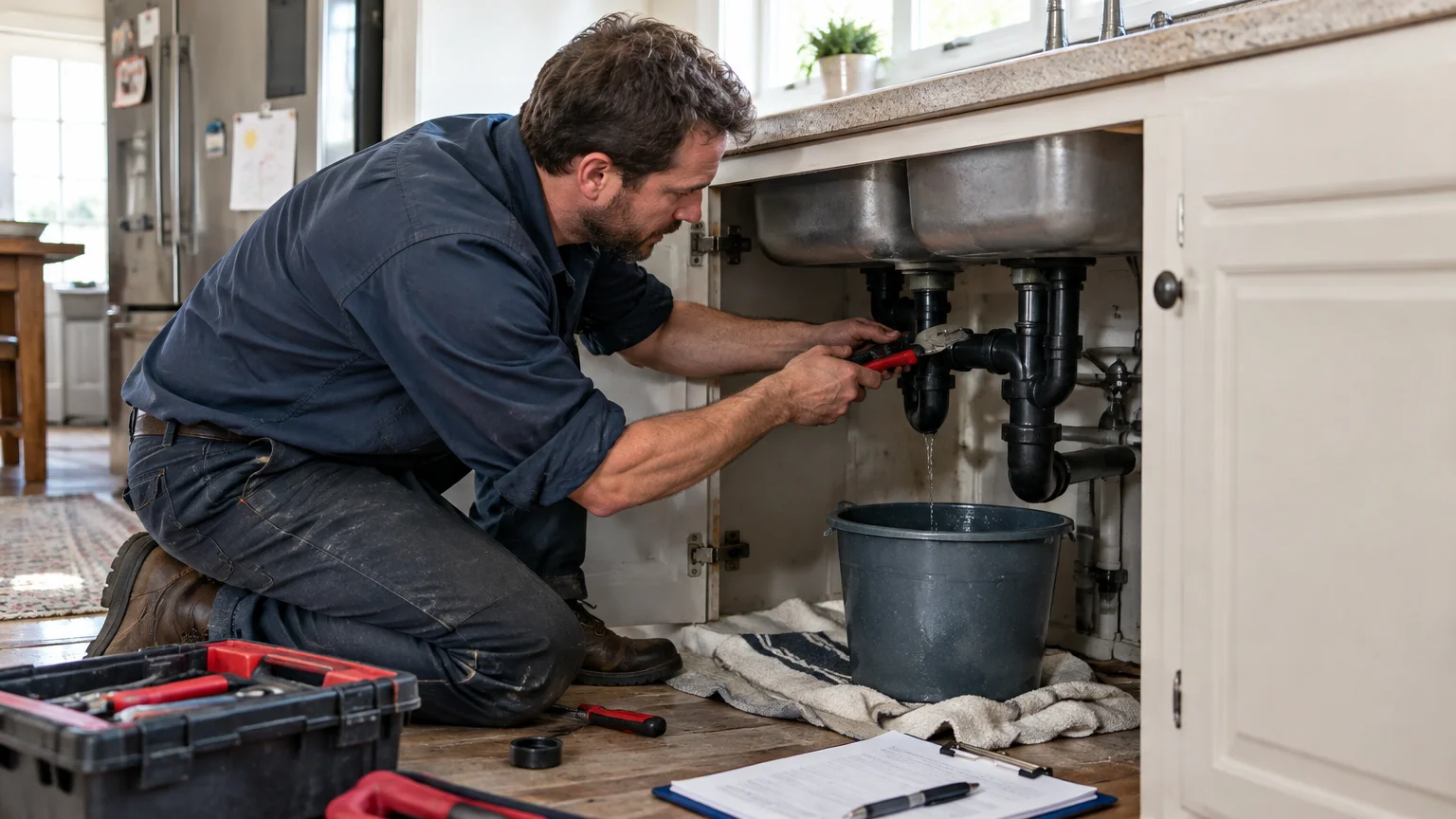
A business emergency plumbing plan helps staff act safely when water problems happen. It sets out how to protect people, stop water flow, move valuable items, and share useful facts with an emergency plumber. This plan can help limit damage and reduce lost work time.
A leaking pipe, blocked drain, or failed water heater can disrupt a store, office, rental property, or apartment building fast. Staff should not wait for water to spread before making a plan. Valparaiso Plumbing helps property owners prepare for urgent plumbing problems and arrange the right plumbing repair when trouble starts.
What should a business do first during a plumbing emergency?
The first step is to protect people and stop the danger. Keep everyone away from wet floors, exposed wires, sewage, hot water, and weak ceilings or walls. One manager should lead the response while another person contacts the emergency plumber.
How to assess immediate risks to people, property, and operations
A quick safety check helps staff choose the next step. Look for active water flow, electrical dangers, slip risks, sewage, gas smells, and damage near lifts or plant rooms. A plant room is a space that holds building equipment. If there is a gas smell, leave the area and contact the gas utility or emergency services as needed. Do not use switches or search for the leak.
A burst pipe can harm more than the room where it breaks. Water may pass through walls, floors, ceilings, and service shafts. In a multi-unit building, it may reach lower floors or nearby tenant spaces. The building manager should check these areas only when it is safe.
If water reaches electrical equipment, do not touch the equipment or stand in water. A qualified person should handle the main electrical supply, and only when conditions are safe. The same rule applies to boilers, water heaters, pumps, and other building equipment.
Which shutoff valves and building systems should staff identify
A shutoff valve controls water flow to a fixture, room, unit, or full building. Staff should close the nearest safe valve when they know where it is. If the flow continues, the main building valve may need to be closed. Never force an old valve. It may break and make the leak worse.
The response plan should mark the main water shutoff, fixture valves, sprinkler controls, water heaters, boilers, pumps, and drain access points. It should also show which systems must stay active for fire safety. Staff should not close a sprinkler control or other safety system unless the right emergency authority gives instructions.
Keep the shutoff map where staff can reach it during a power loss. New workers, tenants, and contractors should know who may operate each valve. Valparaiso Plumbing can help property owners understand warning signs linked to leaks, burst pipes, and other urgent plumbing concerns.
How can a business limit water damage before the plumber arrives?
A business can limit damage by containing safe leaks, moving valuable items, and closing unsafe areas. Staff should only act when there is no risk from electricity, sewage, chemicals, hot water, or weak building materials. The goal is to reduce harm, not to complete a repair without training.
Steps for containing leaks, overflows, and blocked drains safely
After the water supply is controlled, staff can place containers under a small, clean-water leak. Absorbent materials may help stop water from spreading across a floor. Mark wet areas and keep visitors, tenants, and workers away from them.
Do not use an overflowing toilet or sink again. Avoid chemical drain cleaners when a plumber is on the way. These products can harm workers, damage some pipes, and cause dangerous splashes during repair. A plunger may help with a simple fixture blockage when the process is safe. Stop if the blockage does not clear quickly.
A blocked commercial drain may involve grease, roots, damaged pipes, or a larger line serving several fixtures. Repeated plunging may not fix the cause. Treat sewage as dirty and unsafe water. Keep people away, avoid direct contact, and follow the building’s cleaning rules.
Do not open a ceiling, wall, or floor to find a hidden leak. A qualified professional should assess the area first. Do not use fans or powered tools near standing water. A plumber may need leak detection, drain cleaning, pipe repair, or emergency plumbing service to find the source.
What equipment, inventory, and sensitive areas need protection
When the area is safe, move stock, files, computers, tools, and electrical devices away from water. Move items to a dry place without walking through dirty or unsafe water. Shelves, pallets, and covers can keep goods off a wet floor. Do not let covers hide the leak or create a trip risk.
Give extra care to server rooms, cash offices, medical areas, kitchens, food stores, retail displays, and lift equipment. Water near these areas may affect work long after the visible leak stops. A manager should record damaged items and keep receipts or stock records for the owner and insurer.
Ventilation may help a safe, clean-water area dry. Use it only when electrical equipment is not at risk. Follow advice from the plumber, insurer, and water-damage team. Take clear photos before moving large items when this can be done safely.
What information should a business provide to an emergency plumber?
Give the plumber the location, type, timing, and size of the problem. Clear facts help the plumber bring the right tools and plan safe access. Staff should not guess at the cause. They should explain what they saw and what changed.
Details to record about the plumbing problem and affected areas
The site contact should note when the problem began, whether water is still flowing, and which rooms or fixtures are affected. Other useful details include odd smells, sounds, pressure changes, repeated backups, dirty water, and recent repairs. State whether the water looks clean, gray, or contaminated.
List any shutoff valves that were closed and say whether the water stopped. Identify affected floors, units, tenant spaces, restrooms, kitchens, storage rooms, and plant areas. If a water heater, boiler, pump, or gas appliance is involved, report it clearly.
A simple incident record may include:
- The time the issue was found and who reported it
- The rooms, fixtures, units, and floors affected
- Any valves or equipment already turned off
- Visible damage to walls, ceilings, floors, stock, or equipment
- Access risks, security rules, parking limits, and building hours
This record gives the plumber a useful starting point. It also helps the property manager explain the event to tenants, owners, insurers, and other workers. For a commercial property, good notes show what happened and which response steps were taken.
How photos, access instructions, and building plans support faster repairs
Photos can show the leak source, water path, damaged materials, valve position, and nearby equipment. Take photos from a safe, dry place. Do not remove covers, enter crawl spaces, or approach electrical equipment for a better view.
Give access instructions before the plumber arrives. These may include a gate code shared safely, loading rules, keys, security contacts, tenant notices, and the location of the building shutoff. Tell the plumber if an escort is needed or if protective equipment is required.
Building plans can help locate risers, supply lines, drains, plant rooms, cleanouts, and tenant shutoffs. Older plans may not match the current building. Point out recent additions or renovations. A clear handover helps the plumber decide whether leak detection, pipe repair, drain cleaning, or water heater service is needed.
How can businesses prepare for future plumbing emergencies?
Businesses can prepare by writing a short response plan, checking key systems, and training staff before an emergency. The plan should match the property’s size, age, use, and number of occupants. It should cover small leaks and events that may close the building.
What a practical commercial plumbing response plan should include
A useful plan names the decision-maker, backup contact, approved plumber, building owner, insurer, utility contacts, and emergency services. It should explain who may close valves, who can enter plant rooms, and who will update tenants or customers. Review these details when staff, tenants, or service providers change.
The plan should include a valve map, equipment list, access steps, incident form, cleanup rules, and past repair records. Show where staff can find wet-floor signs, absorbent materials, gloves, flashlights, and barriers. Check these supplies from time to time and replace them after use.
A business should set clear limits for DIY work. Staff may report a leak, close a known fixture valve, place a warning sign, and move portable items when safe. They should not cut pipes, open walls, handle sewage, work on gas lines, or repair electrical systems. Gas line plumbing and major pipe repairs need qualified professionals.
How inspections, preventative maintenance, and staff training reduce disruption
Routine checks can find dripping valves, corroded pipes, slow drains, weak seals, low water pressure, and water stains. Focus on busy restrooms, kitchens, water heaters, pumps, roof drains, grease lines, and older pipe sections. The right schedule depends on the building and its plumbing system.
Staff training should include a short walk-through of shutoff valves and safe reporting steps. A drill can test how quickly the team closes an area, protects records, contacts the plumber, and informs occupants. Training should never ask unqualified staff to make unsafe repairs.
A property manager should review each incident after the repair. Ask what failed, how water moved, which actions worked, and what needs to change. Valparaiso Plumbing supports businesses across Valparaiso, including Downtown Valparaiso, Aberdeen, Chesterton, Porter, Hobart, Crown Point, and nearby communities. Its guidance covers emergency plumbing, leaks and burst pipes, water tanks, and other commercial plumbing needs.
Frequently Asked Questions
What should staff do if a pipe bursts in a commercial building?
Move people away, check for electrical dangers, and close the nearest safe water valve. Contact the emergency plumber, record the damage, and protect movable items when safe. Do not enter dirty water, force old valves, or attempt pipe repairs without training.
How can a business find a hidden plumbing leak?
Look for damp walls, stained ceilings, mold smells, unusual meter movement, low pressure, warm floor areas, or water sounds when fixtures are off. These signs do not prove the source. A plumber can use leak detection tools to trace hidden water with less damage.
Should a business use drain cleaner before the plumber arrives?
Chemical drain cleaner is usually a poor choice during a commercial plumbing emergency. It may not clear the cause and can create a burn or chemical exposure risk. Stop using the fixture, keep people away, and report the blockage clearly.
How often should a business update its plumbing emergency plan?
Review the plan after every major incident and whenever the building, staff, tenants, equipment, or service providers change. A routine review can confirm that shutoff maps, access details, emergency contacts, and supplies remain correct. Train staff again when the plan changes.
Key takeaways
- Protect people first by closing unsafe areas and avoiding electrical or dirty water.
- Stop water safely with a known shutoff valve, without forcing old equipment.
- Limit damage by moving stock and equipment only when conditions are safe.
- Give the plumber clear details about timing, location, water type, access, and shutoffs.
- Prepare ahead with valve maps, staff training, inspections, and a written plan.
Conclusion
A business emergency plumbing plan gives staff a clear path during a stressful event. It helps protect people, limit water damage, and give the plumber useful details before arrival. Regular checks and simple training can reduce disruption at offices, stores, apartment buildings, and managed properties.
Find out more about our emergency plumbing in Valparaiso. Contact us today to discuss emergency plumbing support for your Valparaiso property.