The water leak repair cost for a commercial property depends on the leak’s place, size, access, damage, and urgency. A visible fitting may need a simple fix. A hidden pipe may need testing, surface access, drying, and more work. A written quote confirms the final scope and cost.
Commercial leaks can stop work, damage stock, and create safety risks. Fast action can limit water spread and protect the building. Valparaiso Plumbing helps property owners review leak concerns and choose a clear repair plan.
Table of Contents
- How much does commercial water leak repair cost?
- What types of commercial water leaks need professional repair?
- How does leak location affect commercial repair costs?
- What does a commercial water leak inspection include?
- When is emergency commercial leak repair necessary?
- Should a commercial water leak be repaired or replaced?
- How can businesses compare commercial leak repair quotes?
- Frequently Asked Questions
- Key Takeaways
- Conclusion
How much does commercial water leak repair cost?
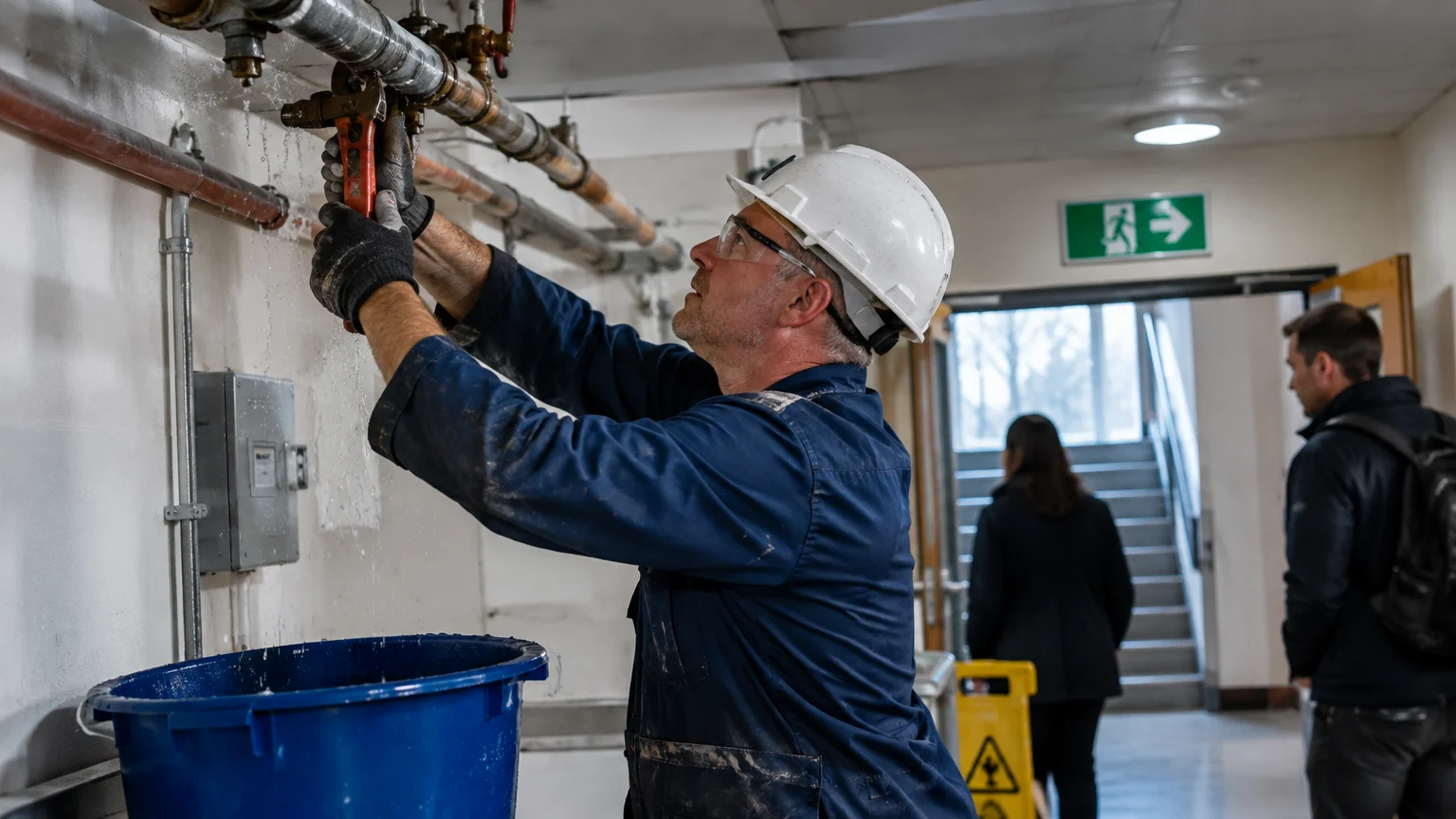
Commercial leak repair cost changes from one building to another. The final amount depends on pipe material, leak size, access, water damage, labor, and urgency. A small exposed connection is often simpler than a leak below a slab or inside a finished wall.
A business should request a written quote after a plumber checks the property. The quote should explain the likely cause, repair method, parts, access work, cleanup, and testing. The final cost is confirmed on that quote, rather than guessed from a general online figure.
What factors have the greatest effect on the final cost?
Access is often a major factor. A pipe above an open ceiling may be easy to reach. A pipe behind tile, drywall, flooring, equipment, or stored goods may need careful removal and repair. Pipe size and material also affect the work.
Urgency matters because an active leak can keep causing damage. Water may reach wiring, equipment, stock, tenant rooms, or customer areas. The plumber may need to isolate part of the building, protect nearby items, and test the system after the repair.
How does leak repair compare with related commercial plumbing work?
A leak repair may be smaller than full pipe replacement, but the cause matters. Drain cleaning clears blocked waste lines. Leak repair stops water escaping from a supply or drain system. Water heater repair, toilet repair cost, fixture work, and drain repair each need different parts and skills.
A leak that harms drywall, flooring, or other materials may need another trade. Those services are separate from plumbing repair. Valparaiso Plumbing can help Valparaiso property owners understand which work belongs in the plumbing quote and which work may need another contractor.
What types of commercial water leaks need professional repair?
Professional repair is needed when water keeps escaping, the source is not clear, or the leak affects a building system. Businesses should not ignore wet ceilings, rising water use, damp walls, low pressure, or repeated plumbing problems. These signs may point to a hidden leak.
Some basic checks are safe for a manager. Staff can close a local shutoff valve, move stock away from water, and inspect exposed connections. They should not open walls, cut floors, repair pressurized lines, or work near electrical equipment without training.
How do visible leaks differ from hidden leaks?
Visible leaks are easier to spot because water appears at a pipe, valve, faucet, toilet, or appliance connection. The true source may still be higher or farther away. Water can travel along ceilings, floors, and framing before it appears.
Hidden leaks may cause stains, peeling paint, soft flooring, musty smells, or unexplained moisture. A commercial plumber may use pressure checks, moisture tools, sound tools, heat tools, or a camera. The right method depends on the building and pipe system.
Which plumbing systems commonly develop leaks in commercial properties?
Leaks can form in supply pipes, drain lines, fixtures, water heaters, boiler connections, irrigation systems, and fire protection equipment. Older pipes may rust or weaken. Newer systems may leak because of poor joints, movement, damage, or failed seals.
Kitchens, restrooms, mechanical rooms, tenant areas, and roof equipment need close review. Gas lines are a separate safety issue. A suspected gas leak requires people to leave and follow local emergency guidance. Staff should never test the line themselves.
How does leak location affect commercial repair costs?
Leak location changes the work because it affects access, testing, safety, and restoration. A leak in an open mechanical room may be found and reached quickly. A leak under concrete, inside a wall, or beneath a finished floor may need more planning and cause more disruption.
The plumber should explain where the leak is believed to be and how certain that finding is. A careful plan can reduce needless wall or floor openings. It can also show if temporary shutdowns or staged repairs are needed.
Why are leaks behind walls, ceilings, or floors more complex?
Hidden leaks often need a search before repair. The plumber may trace moisture, test pipe sections, and inspect nearby rooms. Access openings should be placed with care, but the exact place may not be clear until testing is complete.
Finished surfaces can add work after the plumbing repair. Drywall, tile, flooring, insulation, and ceiling panels may need repair by qualified trades. The business should ask if the plumbing quote covers only access and plumbing work or lists restoration separately.
How do underground and slab leaks change the scope of work?
An underground leak may affect soil, landscaping, parking, or utility paths. A slab leak is below a concrete foundation or floor. Finding the line can be difficult. Repair may involve rerouting, breaking concrete, or using a less disruptive method.
Commercial properties may need controls for traffic, tenants, equipment, and work hours. The plumber should explain expected disruption before work starts. A clear scope helps the owner plan shutdowns and protect staff, customers, and property.
What does a commercial water leak inspection include?
An inspection starts with questions about symptoms, timing, affected rooms, past repairs, and recent changes. The plumber then checks visible pipes, valves, fixtures, pressure, and nearby damage. The goal is to find both the source and the reason for the leak.
The owner or manager should provide access to mechanical rooms, tenant areas, ceiling spaces, shutoff valves, and maintenance records. Better access helps the plumber test more of the system. It can also prevent delays when an active leak needs quick isolation.
How do plumbers find leaks that are not visible?
Plumbers may use pressure testing to find water loss in a closed section. They may listen for escaping water, check moisture patterns, use heat equipment, or inspect drain lines with a camera. No single method works for every building or pipe.
The plumber should explain what each test can and cannot prove. A moisture reading can show a wet area but not the exact pipe. A camera can show some drain problems but cannot inspect every pressurized supply pipe.
What information should a leak inspection report document?
A useful report should name the suspected source, affected system, observed damage, test method, and repair choices. It should say whether the leak is active, isolated, or still under review. Photos can record conditions before work begins.
The report should also list inspection limits. Concealed spaces may not be opened during the first visit. The owner should receive notes about access, shutdowns, safety issues, follow-up tests, and work outside the plumbing scope.
When is emergency commercial leak repair necessary?
Emergency repair is needed when water is spreading, a major line has failed, the building cannot operate safely, or the leak threatens people, equipment, stock, or nearby spaces. A burst pipe, fast ceiling leak, or failed main line should not wait for routine scheduling.
A slow drip may still need quick attention. Small leaks can harm framing, flooring, insulation, and stored goods over time. A property manager should record the condition, protect the area, and arrange professional help before damage grows.
Which signs indicate that a leak cannot wait?
The following signs suggest urgent action:
- Water is flowing from a broken pipe, ceiling, wall, or floor.
- A shutoff valve will not stop the water.
- Electrical equipment or wiring may be wet.
- The leak affects a public, work, or occupied tenant area.
- Floors, ceilings, walls, or structural materials are becoming soft.
- Water pressure suddenly drops across part or all of the building.
People should stay away from unsafe areas and follow the building emergency plan. If water touches electrical systems, staff should not enter until the area is safe.
What should property owners do before the plumber arrives?
The owner should close the nearest safe shutoff valve if its location is known. Staff can move portable items away from water, place safe containers under minor drips, and take photos for records. They should never enter unsafe ceiling spaces or handle damaged electrical equipment.
The owner should note when the problem began and whether water use changed. Access doors, keys, tenant notices, and maintenance records should be ready. These steps help the plumber work faster without asking untrained staff to make repairs.
Should a commercial water leak be repaired or replaced?
The right choice depends on pipe condition, leak cause, location, age, material, and repair history. A targeted repair may suit one damaged joint on sound pipe. Replacement may make more sense when the section has broad rust, repeated failures, or poor access.
A professional should explain both choices when both are sound. The least disruptive option is not always the best long-term choice. The owner should compare the current repair with the risk of another failure in the same section.
When is targeted pipe repair the practical option?
Targeted repair can work when the damaged area is clear and nearby pipe remains sound. It may involve replacing a fitting, seal, valve, or short pipe section. The plumber should test the repair and check nearby connections before normal use returns.
This option may reduce disruption in an active business. It can also fit a planned maintenance window when the leak is controlled. Still, the owner should ask why the failure happened and whether nearby sections show similar wear.
When does replacing a pipe or plumbing section make more sense?
Replacement may be better when pipe has repeated leaks, heavy rust, poor support, or widespread damage. It may also help when the material no longer suits the building. A larger repair can prevent repeated access work and business disruption.
The quote should explain what will be replaced and what will remain. It should list shutdowns, access work, testing, permits when needed, and restoration limits. Local rules may affect commercial plumbing repair, so the owner should ask who handles approvals.
How can businesses compare commercial leak repair quotes?
Businesses should compare the scope, not only the final number. A detailed quote shows whether each plumber included inspection, access, materials, testing, cleanup, and restoration. The final cost should be confirmed in writing before approved work begins.
A short quote may leave out important work. A broader quote may include repairs that lower future risk. The owner should ask questions until the differences are clear and should not choose a contractor from a brief description alone.
What should a detailed plumbing quote include?
A strong quote should include:
- The suspected cause and exact area of the leak.
- The proposed repair or replacement method.
- Pipe, valve, fitting, seal, and other material details.
- Access, isolation, testing, cleanup, and restoration tasks.
- Expected business disruption and water shutdown needs.
- Items that are excluded or may need another trade.
The quote should explain what happens if hidden damage appears after opening an area. Written approval should be required before added work begins. This helps the business control the scope and keep records for owners, tenants, or insurers.
Which licensing, insurance, and workmanship questions should businesses ask?
The business should ask if the plumber is licensed for the work and area. It should also ask for proof of insurance, commercial experience, permits, and inspection handling. Rules can vary by state and local authority, so owners should check official guidance.
The owner should ask who will do the work, how the system will be tested, and what workmanship terms apply. Reviews can help, but clear answers and documents matter more. Valparaiso Plumbing serves property owners in the main Valparaiso area, including Downtown Valparaiso, Aberdeen, Chesterton, Porter, Hobart, Crown Point, and nearby communities.
Frequently Asked Questions
What is the first step when a commercial water pipe leaks?
Keep people away from unsafe areas and stop the water if safe. Close the nearest shutoff valve, protect movable items, and arrange professional help. Do not cut walls, touch electrical equipment, or repair a pressurized pipe without training.
How can a business find a plumbing leak?
A business can inspect exposed pipes, valves, fixtures, ceilings, walls, and floors. It should watch for stains, musty smells, pressure changes, or unexplained water use. Hidden leaks may need pressure testing, sound tools, moisture checks, heat tools, or camera inspection.
Does a hidden leak always require wall or floor removal?
No. A plumber may locate some leaks with testing tools before opening a surface. Access may still be needed to confirm the source and make the repair. The plumber should explain the least disruptive method and possible restoration work first.
Is water leak repair more urgent in a commercial building?
It can be, because commercial buildings often have more occupants, equipment, stock, tenant rooms, and connected systems. A leak can stop work or affect nearby areas. Prompt isolation and inspection can help limit damage.
How should a business choose a commercial plumber?
Check licensing, insurance, commercial experience, written scope, testing plans, and workmanship terms. Compare complete quotes rather than short price statements. Clear communication matters when hidden damage, shutdowns, access work, or another trade may be involved.
Key Takeaways
- Water leak repair cost depends on location, access, damage, urgency, and pipe condition.
- A visible leak can still come from a hidden source farther along the system.
- Businesses should isolate unsafe leaks and avoid electrical or pressurized pipe work.
- A detailed quote should explain testing, access, materials, restoration, and exclusions.
- Repair may suit one damaged area, while replacement may fit repeated failures.
Conclusion
Commercial water leaks need a careful response. First, protect people and limit water damage. Next, confirm the source, review repair choices, and approve a clear written scope.
Valparaiso Plumbing can help businesses and property owners review leak concerns and plan suitable plumbing work. Contact us to arrange professional support for a commercial water leak assessment and repair quote.